


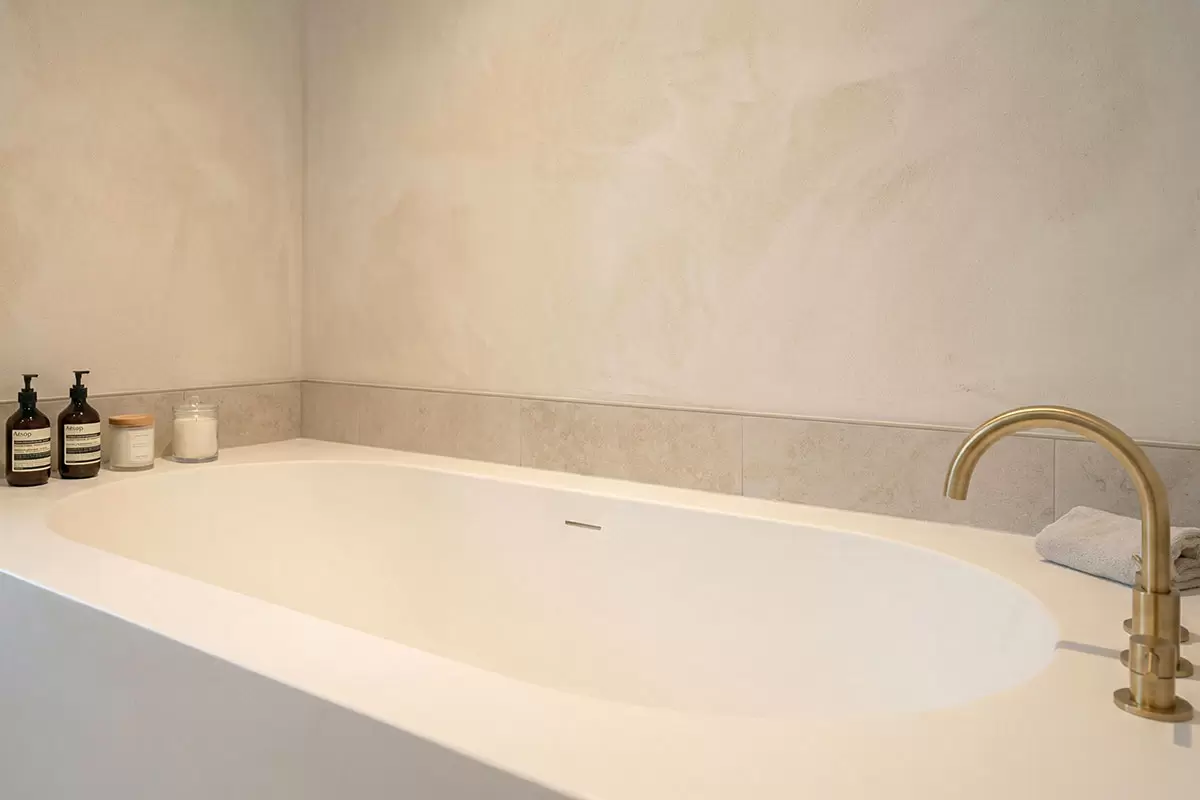
Zen Aesthetics Meets Modern Design
Crafting Spa-Like Hotel Bathrooms with Solid Surface Bathtubs
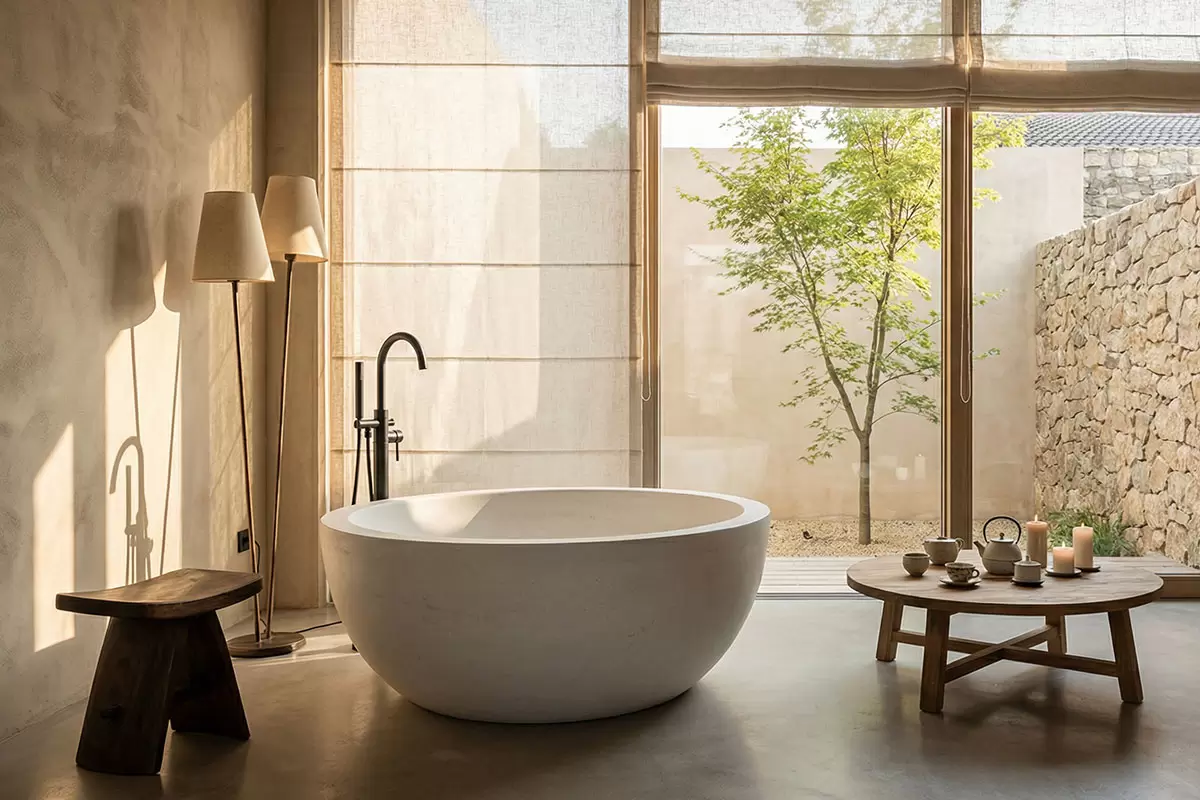
A Zen-inspired hotel bathroom space illuminated by natural dappled light
This photograph captures a profoundly tranquil bathroom space. A circular white freestanding bathtub rests quietly indoors, while floor-to-ceiling windows frame a serene courtyard landscape. Sunlight filters through linen curtains, casting soft, dappled shadows across the floor. A wooden stool, handcrafted ceramics, and a minimalist floor lamp—every element is perfectly balanced. This is the flawless manifestation of Eastern Zen aesthetics in modern luxury hospitality design.
Zen design originates from Eastern philosophy, emphasizing emptiness, tranquility, and simplicity. In high-end boutique resorts and wellness hotels, this style is increasingly sought after. Modern travelers seek these accommodations not merely for a night's stay, but as a sanctuary to find inner peace. A well-executed Zen bathroom allows guests to truly escape the urban clamor and enter a meditative state of deep relaxation.
The Core Philosophy of Zen Bathroom Spaces
Zen design is not merely a replication of Japanese style; it is the architectural expression of a lifestyle philosophy. The bathroom depicted embodies several core principles: negative space (leaving room to breathe), nature, minimalism, and harmony. Together, these elements curate a deeply healing atmosphere.
The essence of Zen is "empty but not void, quiet but not lonely." In bathroom design, this translates to a space that feels expansive yet purposeful, serene yet warm. Every element serves a distinct function, yet nothing is excessive.
The circular bathtub is positioned in the center of the room, surrounded by generous negative space. From a traditional commercial perspective, this might seem like wasted square footage, but in Zen design, it is the very soul of the space. This intentional emptiness provides visual breathing room, allowing the mind to settle and peace to take over.
The minimalist silhouette of a solid surface circular freestanding bathtub
The Symbolic Meaning of the Circular Bathtub
The choice of a circular bathtub is highly intentional. In Eastern culture, the circle symbolizes completeness, harmony, and the cycle of nature. A round tub features no harsh angles; it is visually softening and ergonomically designed to help the body relax completely during a soak.
Solid surface (stone resin) is the ultimate material for crafting these circular masterpieces. Achieving a perfect, seamless circle with natural carved stone is exceedingly difficult and cost-prohibitive. Solid surface allows for flawless, one-piece casting, resulting in fluid lines and a velvety finish. The bathtub featured here utilizes a premium matte white solid surface, offering a texture as smooth and warm as natural jade.
The Zen Texture of Solid Surface
Stone resin replicates the substantial feel of natural stone but offers a more refined, consistent finish. Opting for a matte surface ensures the tub feels warm and tactile to the touch, entirely avoiding the cold, plastic feel of standard acrylic. This organic texture aligns perfectly with the Zen pursuit of natural materials.
White serves as the foundational color of Zen spaces, representing purity and the concept of "nothingness." However, it should never be a harsh, clinical white. Solid surface can be custom-pigmented to a soft milky white or warm ivory, radiating a comforting glow under natural light.
The Practicality of the Round Tub
A circular bathtub isn't just visually striking; it delivers unparalleled ergonomic comfort. Without right angles, entry and exit are safer. When reclining, the gentle curve perfectly contours to the bather's spine. Furthermore, it boasts a larger water capacity than standard rectangular tubs, allowing for a fully immersive, full-body soak.
Round tubs are ideally placed in the center of a room or adjacent to a window. Placed by the glass, guests can bathe while connecting with the courtyard landscape. This seamless dialogue between the interior and the outdoors is a hallmark of Zen spatial design.
Harnessing Natural Light
The most captivating element of this space is the lighting. Expansive floor-to-ceiling windows invite abundant natural light, while natural linen curtains filter out harsh glares, leaving a soft, diffused glow. Light ebbs and flows through the room, casting architectural shadows on the floor and dynamic gradients on the walls. Mastering natural light is the true soul of a Zen space.
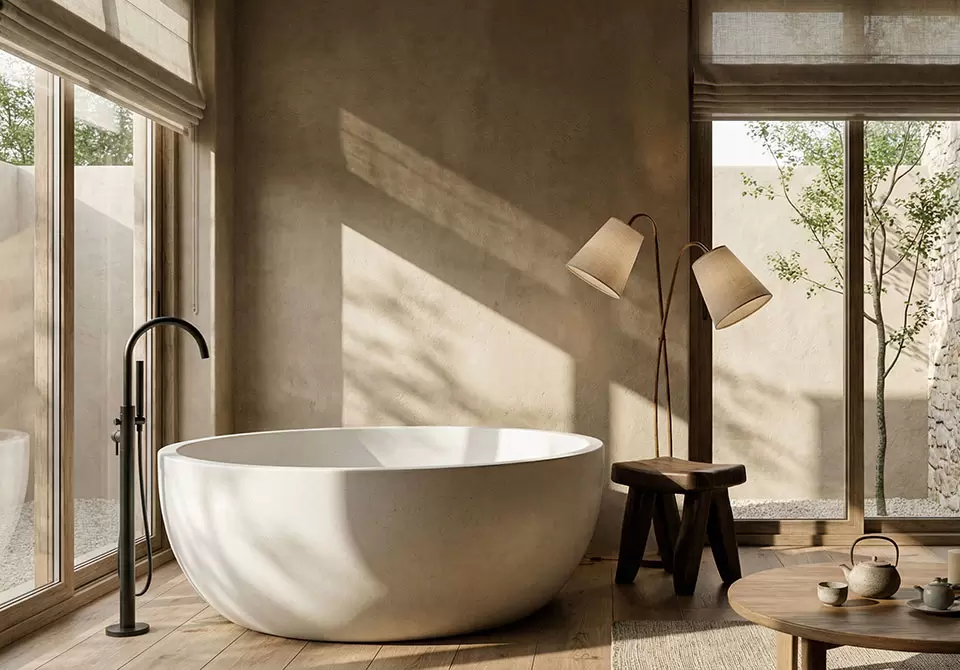
The fluid movement of natural light within a Zen-inspired bathroom
Zen spaces strictly avoid aggressive artificial lighting. The room features a single, unpretentious floor lamp tucked in a corner—not meant for primary illumination, but for setting an evening mood. The primary light source remains the sun, ensuring the space evolves organically throughout the day: gentle morning rays, bright midday illumination, and the golden warmth of dusk.
The exterior courtyard is equally deliberate. A single sculptural tree and a few carefully placed stones create a profound impact. This technique of "borrowed scenery" (Shakkei) is a staple of Eastern landscaping. The bathtub transcends its function as a washing fixture; it becomes a prime viewing pavilion and a sanctuary for meditation.
Lighting Design Principles for Zen Bathrooms
Prioritize natural sunlight through large-scale windows or architectural skylights.
Utilize linen drapes or wooden louvers to control light intensity and curate a diffused atmosphere.
Conceal artificial light sources; avoid harsh directional spotlights or elaborate chandeliers.
Employ indirect lighting, washing light gently across walls or ceilings.
Select warm color temperatures between 2700K and 3000K to mimic the soothing glow of natural fire or sunset.
Avoid cluttered lighting schemes; one or two ambient focal points are sufficient.
The Harmonious Blend of Materials
Zen spaces celebrate the authenticity and rustic nature of materials (Wabi-Sabi). This design employs a curated palette of natural finishes. The walls feature hand-troweled microcement or plaster, proudly displaying artisanal imperfections. The floor is a deep, grounding poured concrete. Wooden stools and low tables retain their raw grain, while the ceramic vessels boast beautifully uneven, handcrafted glazes.
Wall Finishes
Earthy plaster, microcement, or diatom mud offering a tactile, rough-hewn texture. Opt for muted tones like beige, warm grey, or earthen clay.
Flooring Materials
Seamless poured concrete or honed terrazzo for a monolithic, grout-free foundation. Darker tones anchor the space and contrast with the walls.
Wood Elements
Raw or reclaimed timber, preserving natural knots and grain patterns. Left unfinished or treated only with clear matte wax to honor the wood's true character.
Textile Selections
Natural fibers like linen and organic cotton in unbleached, muted tones. Used for curtains and plush towels to introduce softness.
Ceramic Accents
Hand-thrown pottery with organic, imperfect glazes. In Zen aesthetics, these imperfections are revered as marks of true beauty and time.
Stone Details
Raw river rocks or natural stones placed strategically in corners or the courtyard. They act as anchors, bringing an ancient, grounding energy indoors.
A solid surface bathtub integrates flawlessly into this rustic material palette. By selecting a matte white finish with a warm, stone-like touch, it harmonizes effortlessly with the surrounding organic textures. The key is to avoid high-gloss, ultra-perfect acrylics, which would severely disrupt the grounded, earthy vibe.
A harmonious layering of natural, tactile materials
The Wisdom of Spatial Layout
The layout of a Zen space strictly adheres to the philosophy of "Less is More." The items within the bathroom are sparse, yet each holds distinct significance. The freestanding tub is the undisputed protagonist, holding the position of highest honor. A low wooden table by the window hosts a simple tea set and incense. A minimalist stool sits in the corner for garments. A solitary floor lamp awaits the night.
Executing this extreme minimalism requires design courage. Many designers fear a space will look "empty" and rush to fill it with décor. However, Zen aesthetics demand this exact emptiness. Only in the void can the mind find stillness, the eyes find rest, and the spirit find peace.
Key Directives for Zen Bathroom Layouts
Give the tub breathing room. Never push a freestanding tub flush against a wall. Center it or angle it to command the space, which also greatly simplifies housekeeping. Optimize the sightline from the tub directly to the most tranquil outdoor view.
Conceal the clutter. Utilitarian items disrupt the purity of the space. Utilize recessed wall niches or hidden cabinetry to stash commercial toiletries. Only display mindfully selected essentials, such as a hand-carved soap dish or a natural bamboo bath brush.
Streamline the flow. The circulation path—from the door to the vanity, and to the bathtub—must be clean and unobstructed. Eliminate sharp turns or physical barriers. This intuitive flow generates a subconscious feeling of ultimate freedom and comfort.
Ideal Hospitality Venues for Zen Design
| Property Type | Spatial Characteristics | Bathtub Selection | Guest Experience |
|---|---|---|---|
| Mountain Retreats | Built into the landscape, expansive vistas | Round or oval freestanding tub, window-facing | Healing immersion with panoramic nature views |
| Hot Spring Resorts | Indoor-outdoor fusion, courtyard focus | Large circular stone resin tub, semi-open layout | Deep thermal relaxation and spa therapies |
| Boutique Design Hotels | Minimalist architecture, artistic ambiance | Asymmetrical solid surface tub, sculptural form | Elevated artistic and architectural appreciation |
| Wellness & Meditation Centers | Ultra-minimalist, distraction-free zones | Pure geometric round tub, warm matte white | Spiritual cleansing and profound mental detox |
Blurring the boundaries between interior sanctuary and exterior landscape
Mastering the Details in Zen Bathrooms
The success of Zen design hinges entirely on restraint in the details. Notice the subtleties: the window frames are crafted from warm timber; the curtain folds fall naturally, unforced and unpressed; the floor lighting is meticulously calculated to highlight architectural proportions.
Plumbing hardware must be fiercely minimalist. Opt for matte black or brushed gunmetal fixtures with clean, unadorned profiles. A single, ultra-slim towel bar should blend into the background. Flashy, polished chrome or overly ornate fixtures will instantly shatter the meditative illusion.
The selection of interactive objects must be deliberate. The wooden bowls and ceramic tea cups on the side table bear the marks of human touch and time. These are not mere props; they invite guest interaction. Encouraging a guest to brew a pot of loose-leaf tea or light a stick of sandalwood before bathing transforms a simple soak into a profound, grounding ritual.
Techniques for Welcoming Nature
The courtyard landscape is a non-negotiable extension of the Zen bath. The tree outside is chosen for its sparse, elegant branching, offering dynamic beauty across all four seasons: tender green in spring, lush shade in summer, golden leaves in autumn, and striking silhouettes in winter.
Indoors, introduce nature with extreme restraint. A single, graceful branch or a lone, subdued blossom (like a white plum blossom or dried lotus) in a rustic vase is entirely sufficient. Reject massive, vibrant floral arrangements. This quiet, restrained beauty captures the very heart of Wabi-Sabi.
Customization Crucials for Solid Surface Bathtubs
To replicate the breathtaking aesthetics of these reference images, a bespoke approach to bathtub manufacturing is essential. The dimensions of a circular tub must be perfectly scaled to the room. Typically, a diameter of 1400mm to 1600mm (55" to 63") and a depth of 450mm to 500mm (18" to 20") offers the golden ratio of visual elegance and soaking comfort for the majority of guests.
Color matching is critical. Request a custom "warm ivory" or "milky white" rather than a stark, brilliant white or dull grey. Specify a matte or velvet finish to ensure a warm, skin-friendly touch. A rim thickness of 15mm to 20mm strikes the perfect balance—robust enough for commercial durability, yet visually delicate.
Pay attention to the casting details. The rim must be radiused (rounded) to provide a comfortable headrest. The pop-up drain cover should be crafted from the same solid surface material to maintain uninterrupted visual flow, and the overflow slot should be sleekly integrated into the tub's inner wall.
OLEARY Bath: Custom Solid Surface Solutions for Zen Spaces
With over 15 years of dedicated B2B manufacturing expertise in hospitality sanitary ware, OLEARY Bath possesses a profound understanding of Zen architectural requirements. Our advanced solid surface (stone resin) facility allows for limitless customization—whether you require perfectly circular, deep-soaking ovals, or bespoke sculptural forms. We offer precise color-matching and specialize in the warm, velvet-matte finishes essential for luxury wellness spaces.
We are more than just a manufacturer; we are your project engineering partners. From spatial planning and material synergy to custom mold creation and B2B wholesale logistics, we have the experience to support high-end boutique hotels and resort developers worldwide.
If you are developing a Zen-inspired retreat, wellness resort, or boutique B&B, connect with our engineering team today. We provide comprehensive CAD drawings, material samples, and an extensive portfolio of successful global hospitality projects. Crafting a space of true tranquility requires flawless execution in every detail—and at OLEARY, we deliver exactly that.
A bespoke Zen-inspired solid surface bathtub manufactured by OLEARY for a luxury boutique resort
Zen aesthetics are far more than a decorative trend; they are a spatial translation of a mindful philosophy. Integrating this concept into hotel bathroom design means offering your guests a genuine sanctuary for physical and mental healing. Thanks to its limitless moldability, structural integrity, and organic tactile warmth, the solid surface bathtub stands as the ultimate medium for bringing Zen designs to life.
By honoring the principles of negative space, natural harmony, and uncompromising minimalism, you can craft a bathroom that inspires profound peace. Guests will remember this extraordinary tranquility, transforming a single stay into lifelong brand loyalty. In today's hyper-connected, high-stress world, providing a true haven of silence is the ultimate luxury—and the highest value proposition a boutique hotel can offer.