



What Is an Integrated Countertop Basin (and Why Is It Easy to Clean)?
An integrated countertop basin — also called a one-piece basin and countertop — is a washbasin and vanity surface cast from a single continuous piece of solid surface material, with no seam between the bowl and the surrounding deck. Because there is no joint for water, soap residue, or bacteria to collect in, the entire surface wipes clean in one pass, making daily maintenance noticeably simpler than with a separately mounted sink.

How an Integrated Countertop Basin Differs from a Standard Setup
A conventional vanity pairs a countertop — usually stone, laminate, or tile — with a separate undermount sink or vanity countertop bonded or clipped into a cut-out. That joint line is where problems begin. Caulk ages, discolors, and eventually harbors mold. Even well-maintained grout lines trap mineral deposits from hard water and soap film that resist ordinary wiping.
An integrated design eliminates that joint entirely. The basin bowl flows into the deck surface as one continuous form. Water splashed from handwashing or rinsing has nowhere to pool at a rim edge or seep under a seal, because there is no rim edge or seal to speak of.
The Material Behind the Design
Solid surface material is the reason a seamless one-piece basin and countertop is both manufacturable and practical. The material is a homogeneous acrylic or polyester-based composite that can be thermoformed, cast, and adhesively joined so that finished seams become invisible and structurally continuous. Unlike natural stone, it is non-porous, meaning liquids do not penetrate the surface itself. Unlike ceramic or vitreous china, it can be sanded and buffed if surface scratches accumulate over years of use, restoring the original appearance without replacement.
These properties combine to make the integrated countertop basin an especially sensible choice wherever hygiene, visual cleanliness, and long-term maintainability matter — both in residential bathrooms and in hospitality settings where housekeeping efficiency is a genuine operational concern.
Is a One-Piece Basin Actually Easier to Maintain?
This is the question most homeowners and hospitality buyers ask once they start comparing options. The honest answer is yes, and the reason is structural rather than marketing language.
With a conventional vanity-plus-undermount setup, routine cleaning involves several distinct zones:
- The countertop surface around the sink cut-out
- The caulk or grout bead at the sink-to-counter joint
- The sink bowl interior, including the area just inside the rim where mineral deposits form
- Any hardware fittings seated in the deck, each carrying its own seal
Each of those zones ages at a different rate and requires different cleaning products or techniques. The joint caulk, in particular, needs periodic removal and reapplication to prevent mold from becoming permanent.
An integrated countertop basin collapses all of those zones into a single continuous surface. A damp cloth or non-abrasive cleaner moves from the deck into the bowl and back out again without catching on transitions. There are no hidden ledges at the bowl rim to collect toothpaste residue, no grout lines to scrub. For households that prefer minimal upkeep, or for hotel rooms that need fast, reliable turnaround between guests, that simplicity is a practical advantage, not just an aesthetic one.

Design Flexibility for Residential and Hospitality Projects
Beyond maintenance, integrated countertop basins offer design freedom that separate-component setups cannot match. Because the basin is fabricated to order, the bowl position, depth, shape, and deck dimensions are all specified at the manufacturing stage rather than constrained by off-the-shelf product combinations.
For a residential master bathroom, that might mean a long double-basin vanity top in a matte white finish sized precisely to the existing cabinetry. For a hotel guestroom, it might mean a shallow-profile basin with a generous deck on one side for toiletries, finished in a warm greige tone that reads as premium without requiring stone. In both cases, the result installs as a single piece, reducing on-site labor and eliminating the variables that come with aligning multiple components.
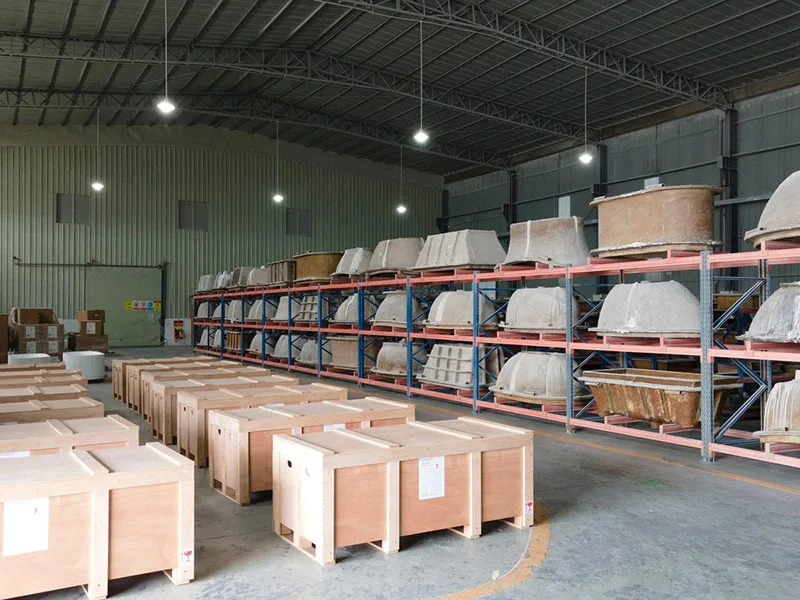
OLEARY produces integrated solid surface vanity tops and basins for both markets, working with designers, developers, and homeowners from initial specification through fabrication. Custom dimensions, bowl configurations, and finish options are all handled through the same process, whether the project involves one bathroom or an entire hotel floor.
What to Specify When Ordering
If you are evaluating an integrated countertop basin for a project, the following dimensions and details will typically be needed before fabrication can begin:
- Overall countertop length and depth, including any overhang beyond the cabinet
- Basin bowl dimensions: interior width, front-to-back depth, and bowl depth
- Number of basins on a single top (single, double, or custom)
- Tap hole positions and quantity, or preference for a wall-mounted faucet with no deck holes
- Edge profile: square, eased, beveled, or custom
- Finish: matte, semi-gloss, or textured
- Color from the material manufacturer's range, or custom color matching for hospitality brands
Reviewing the bathroom fixtures catalog before your consultation gives a useful starting point for finish and configuration options. Projects with non-standard requirements — unusual dimensions, branded colorways, or integrated features like built-in drainer channels — are handled as OEM/ODM bathroom fixtures, with full technical support from the fabrication side.
To begin a project or confirm whether your specifications fall within standard production, request a quote directly from the OLEARY team with your countertop dimensions and any reference images. Custom lead times and minimum order quantities vary by configuration and will be confirmed at that stage.