


Undermount vs. Vessel vs. Integrated Basins: Which Countertop Style Fits Your Bathroom?
Choosing between an undermount, vessel, or integrated basin comes down to three factors: your cleaning habits, your installation timeline, and the look you want to live with. Undermount basins sit below the countertop for a seamless surface. Vessel basins rest on top for a sculptural effect. Integrated basins are molded as one piece with the countertop, eliminating seams entirely. Each style suits a different bathroom and a different homeowner.
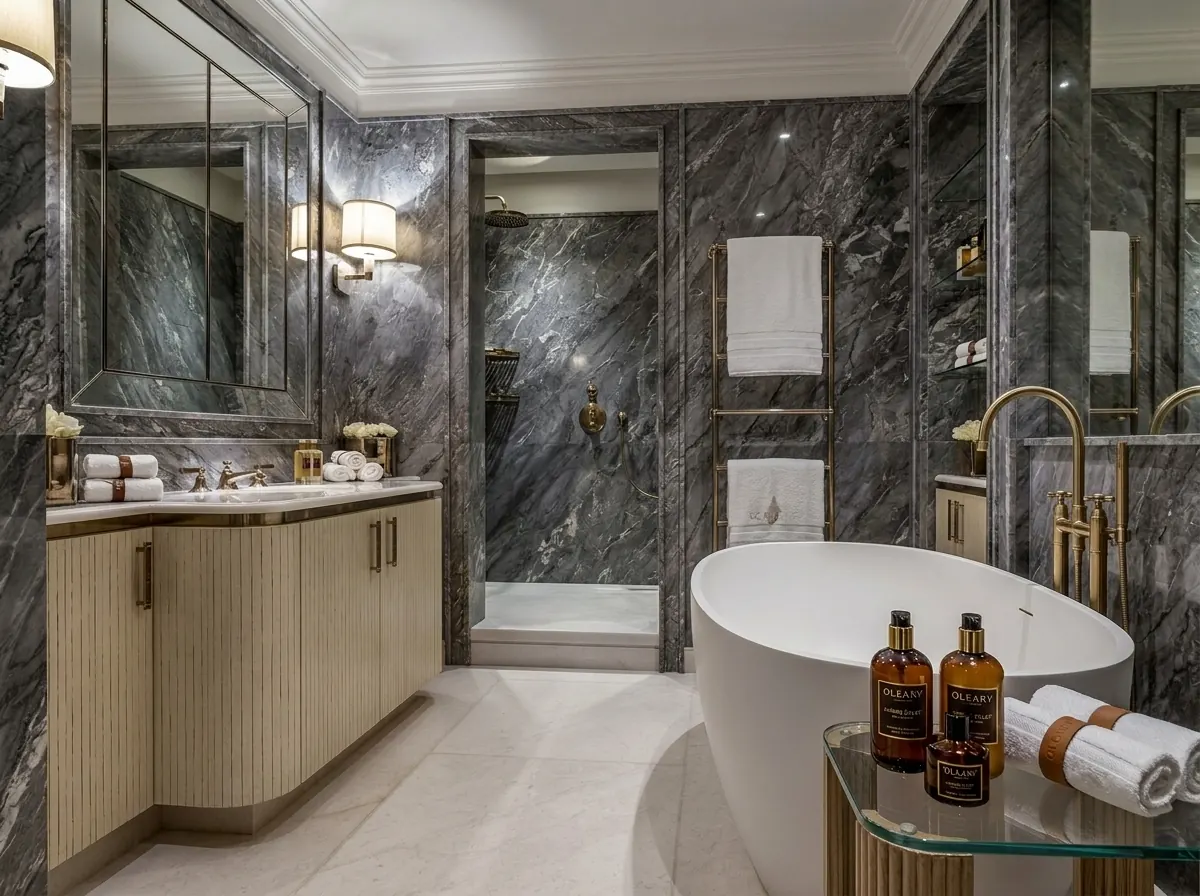
Understanding the Three Basin Styles
Undermount Basins
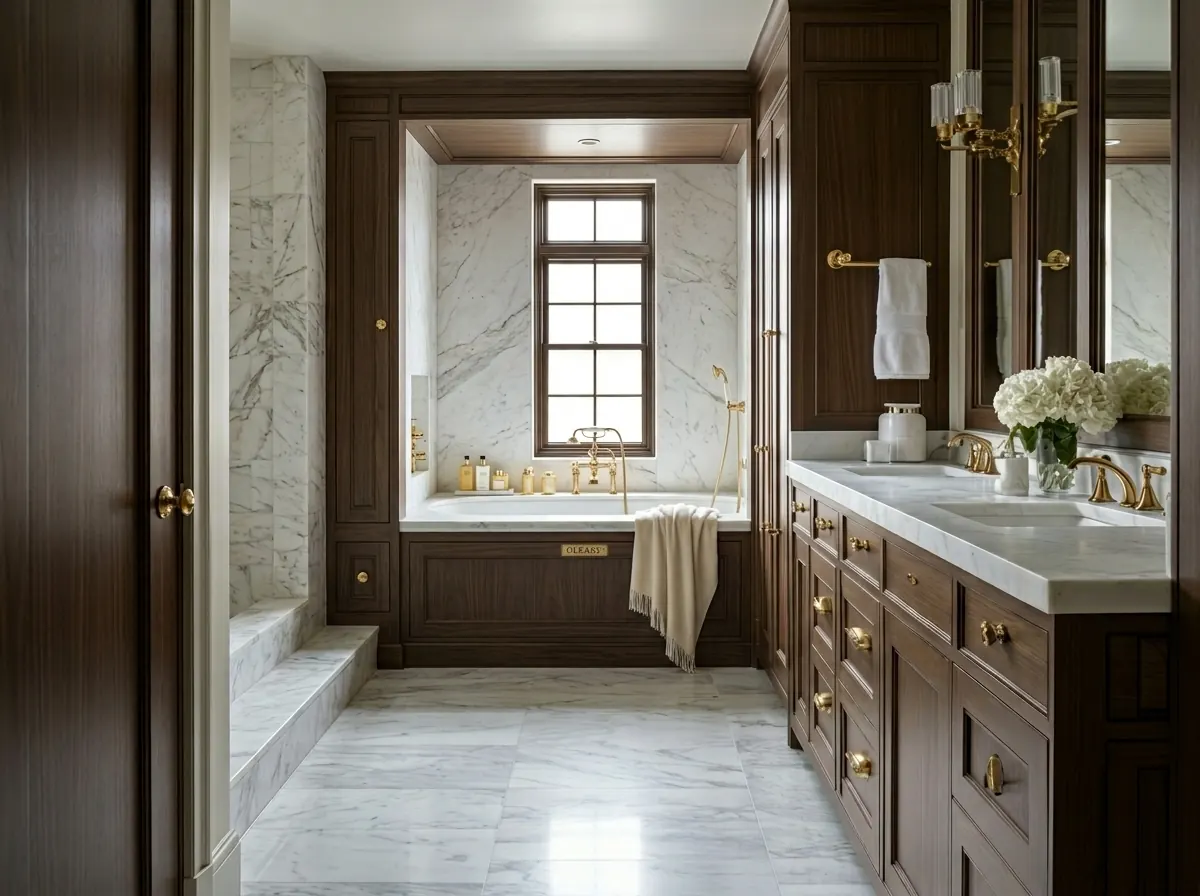
An undermount sink / vanity countertop mounts below the countertop surface, with the basin rim bonded or mechanically fastened to the underside of the stone, solid surface, or engineered material above it. The result is a clean, uninterrupted countertop plane that runs right to the basin edge.
This configuration is the default choice for most residential vanities and is the dominant style in hospitality projects, precisely because it keeps the work surface continuous. Water and debris wipe directly off the counter and into the basin without catching on a rim or a seam.
Easiest to clean? Undermount basins rank at the top for daily maintenance. Because the countertop surface is uninterrupted, there is no crevice where the basin meets the counter for soap scum, toothpaste, or moisture to collect. A single wipe clears the entire surface.
Easiest to install? Of the three styles, undermount installation is the most involved. The countertop cutout must be precise, and the basin must be properly supported and sealed from below. For a custom or stone counter, this work belongs to a professional fabricator. The trade-off is a finish that looks polished and stays that way.
Vessel Basins
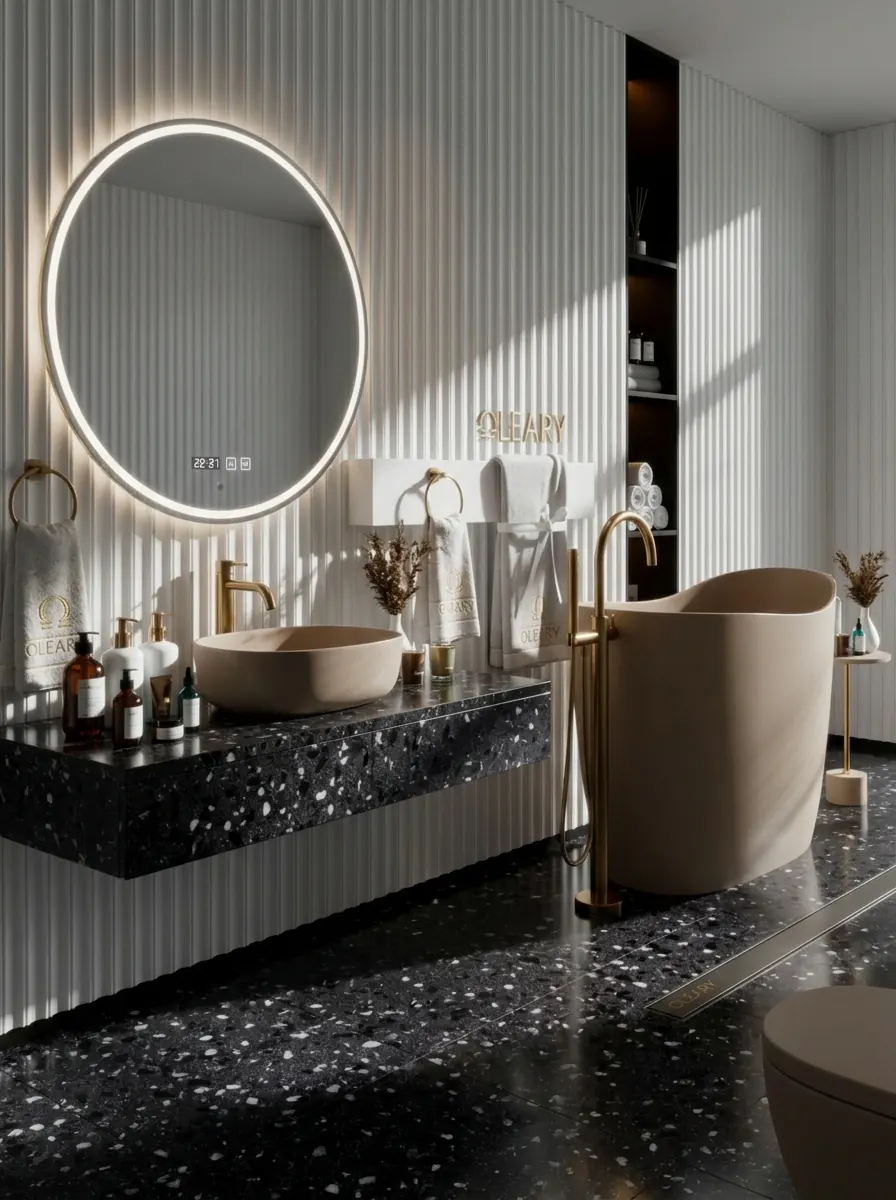
A vessel basin sits on top of the countertop rather than inside it. It requires only a small drain cutout in the counter surface and, in most configurations, a taller faucet to reach over the basin wall. Installation is straightforward — the basin simply rests on the counter — which makes vessel styles a practical choice for renovation projects where countertop modification needs to stay minimal.
The visual impact is dramatic. A vessel basin functions almost as a decorative object, and manufacturers offer them in a wide range of materials: ceramic, glass, stone, and solid surface material. That said, the raised rim and the gap between basin and counter create surfaces that collect moisture and product residue. Regular cleaning around the base of the vessel is necessary to prevent staining and mildew.
Vessel basins work well in powder rooms or feature bathrooms where visual impact matters more than everyday utility. They are a harder fit for busy family bathrooms or high-traffic hotel rooms where staff need to clean quickly and thoroughly.
Integrated Basins
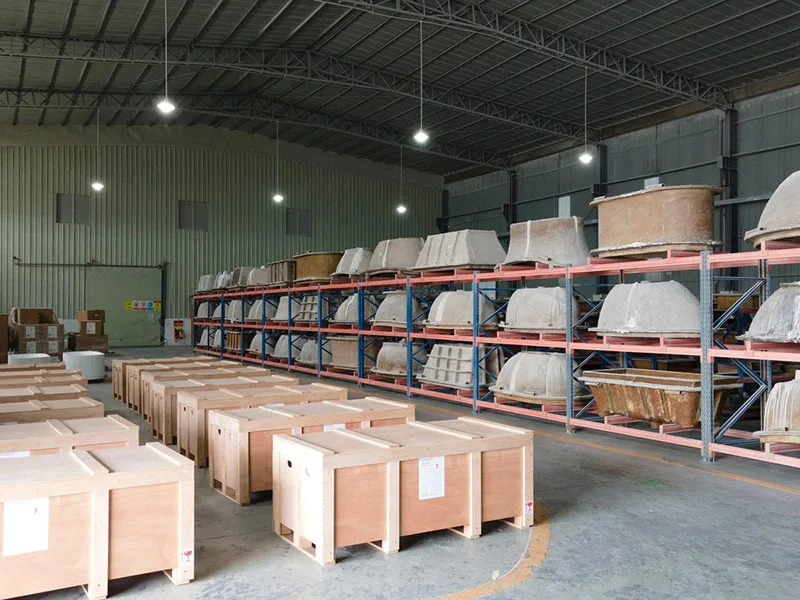
An integrated basin is fabricated as a single continuous piece with the countertop — no seams, no joint lines, no caulk. The basin bowl flows directly out of the counter surface as if carved from one block of material. This is achievable with thermoformed or cast solid surface material, and it is a signature capability of custom fabricators like OLEARY.

Because there are no joints at all, integrated basins are the easiest of the three to clean and the most hygienic option available. There is nowhere for bacteria, mold, or moisture to hide. This is a primary reason integrated vanity tops are the preferred specification for luxury hotel properties and high-end spas, where hygiene standards are non-negotiable and cleaning must be fast.
The trade-off is that integrated basins are fabricated-to-order and cannot be swapped out independently of the countertop. If the basin sustains damage, the repair or replacement involves the full top. For a quality solid surface piece, however, minor scratches and surface marks can often be sanded out on-site — a repair option that ceramic or stone basins do not offer.
Easiest to install? Integrated tops arrive as a finished, ready-to-drop unit. There is no separate basin to handle, no cutout to seal, and no alignment to manage. The top sits on the cabinet, the drain connects, and the installation is done. For new builds and full renovations, this simplicity makes integrated vanity tops an efficient choice.
Side-by-Side Comparison
| Feature | Undermount | Vessel | Integrated |
|---|---|---|---|
| Cleaning ease | High — no rim to trap debris | Moderate — base gap collects residue | Highest — zero seams |
| Installation complexity | Moderate — requires precise cutout and sealing | Low — minimal countertop work | Low — single unit, drop-in fit |
| Visual style | Clean, transitional, broadly compatible | Statement piece, sculptural | Seamless, contemporary, high-end |
| Material flexibility | Stone, engineered stone, solid surface | Ceramic, glass, stone, solid surface | Solid surface (thermoformed or cast) |
| Best fit | Residential bathrooms, hotel renovation | Powder rooms, feature bathrooms | Luxury residential, hospitality, spa |
Which Style Is Right for Your Project?
If you are outfitting a busy family bathroom or a hotel guest room that needs to be cleaned quickly and reliably, an integrated solid surface vanity top or an undermount basin are your practical choices. Both eliminate the ledges and gaps that make cleaning difficult.
If the bathroom is a low-traffic powder room or a showcase space — and you want a basin that reads as a design feature — a vessel basin gives you that without requiring significant countertop work.
For hospitality projects or any application where hygiene, longevity, and a seamless aesthetic all matter equally, integrated solid surface is the specification that satisfies all three. OLEARY fabricates custom integrated vanity tops and undermount sink / vanity countertop solutions for both residential and hospitality clients, with OEM/ODM bathroom fixtures available for developers and contract buyers.
Browse the full bathroom fixtures catalog to see available profiles, dimensions, and material finishes, or request a quote for a project-specific fabrication.