



What Are the Pros and Cons of Solid Surface Countertops in a Bathroom?
Solid surface countertops are a strong choice for bathrooms: they are completely non-porous, so they resist bacteria and staining without annual sealing, and surface scratches can be sanded out rather than lived with permanently. The main trade-offs are moderate heat sensitivity and a higher upfront cost than laminate or acrylic. For most bathroom vanity applications, the long-term benefits outweigh those limitations.
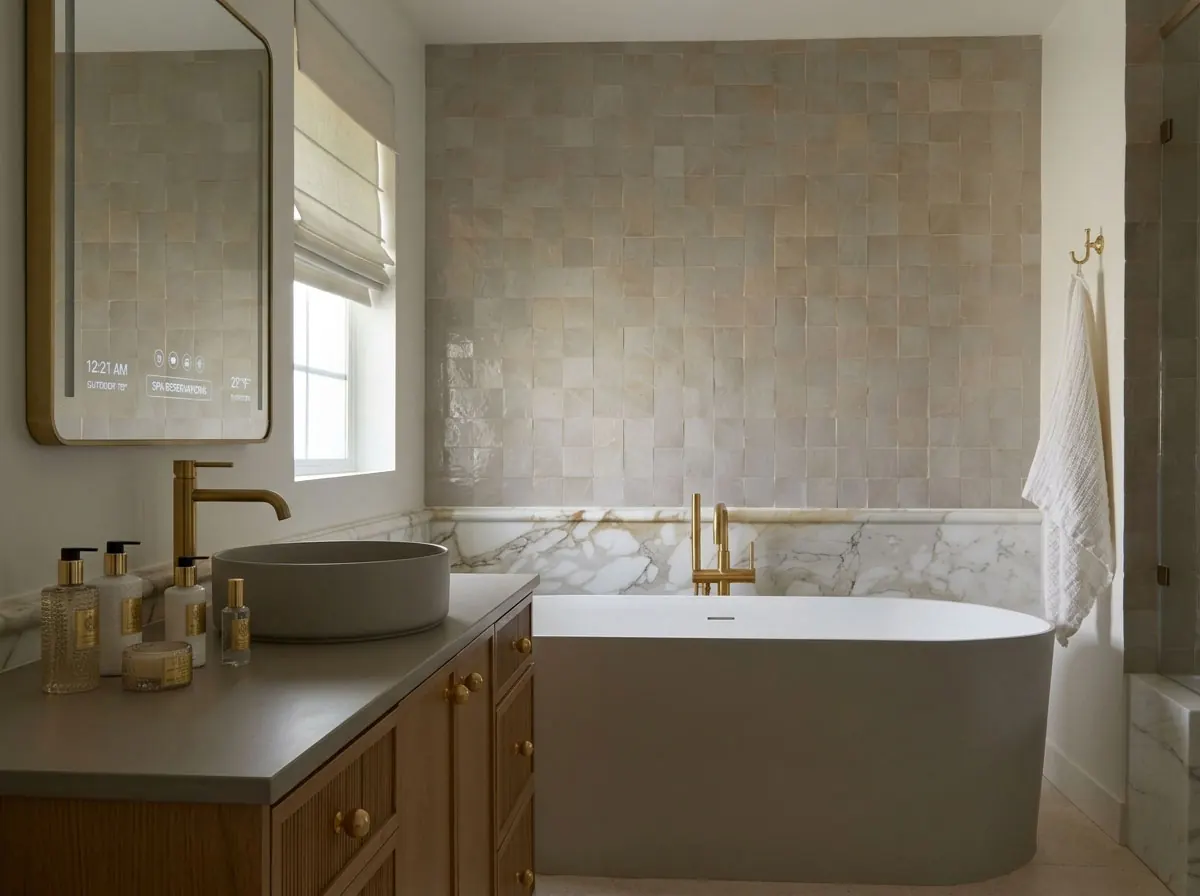
Pros of Solid Surface Bathroom Countertops
- Non-porous surface, no sealing required. Unlike granite or marble, solid surface has zero porosity. Water, soap residue, and cosmetics cannot penetrate the material, which eliminates the mildew and staining risks that come with grout lines or porous stone. This makes it one of the most hygienic countertop options available for wet bathroom environments.
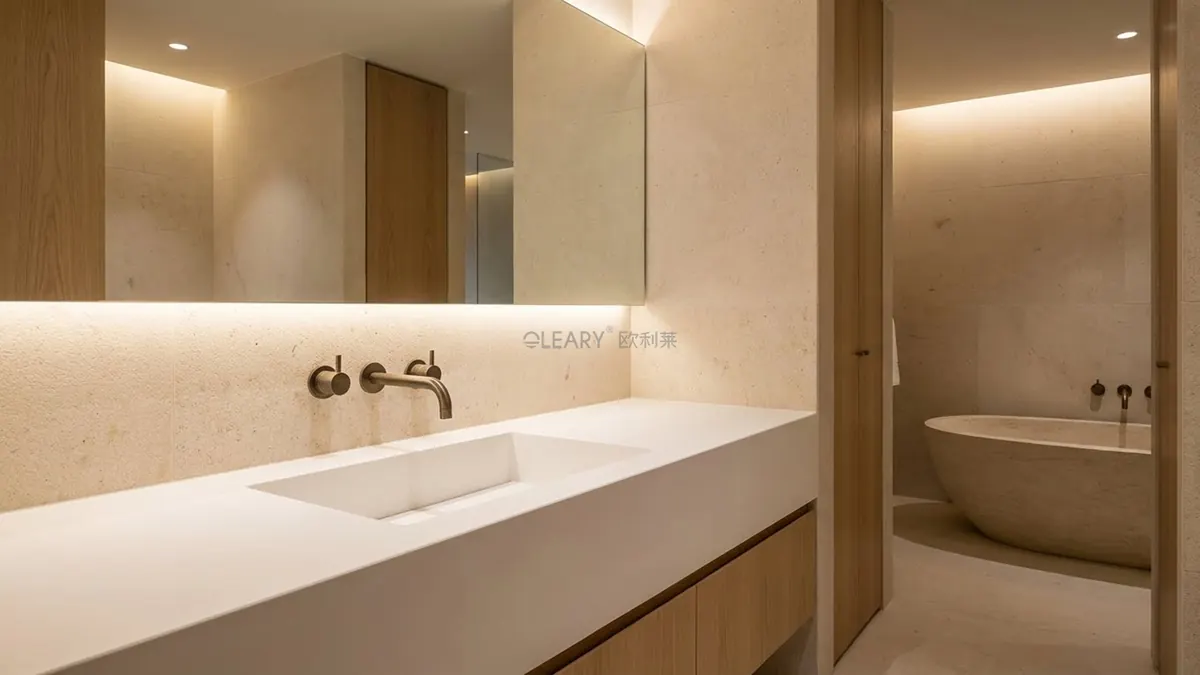
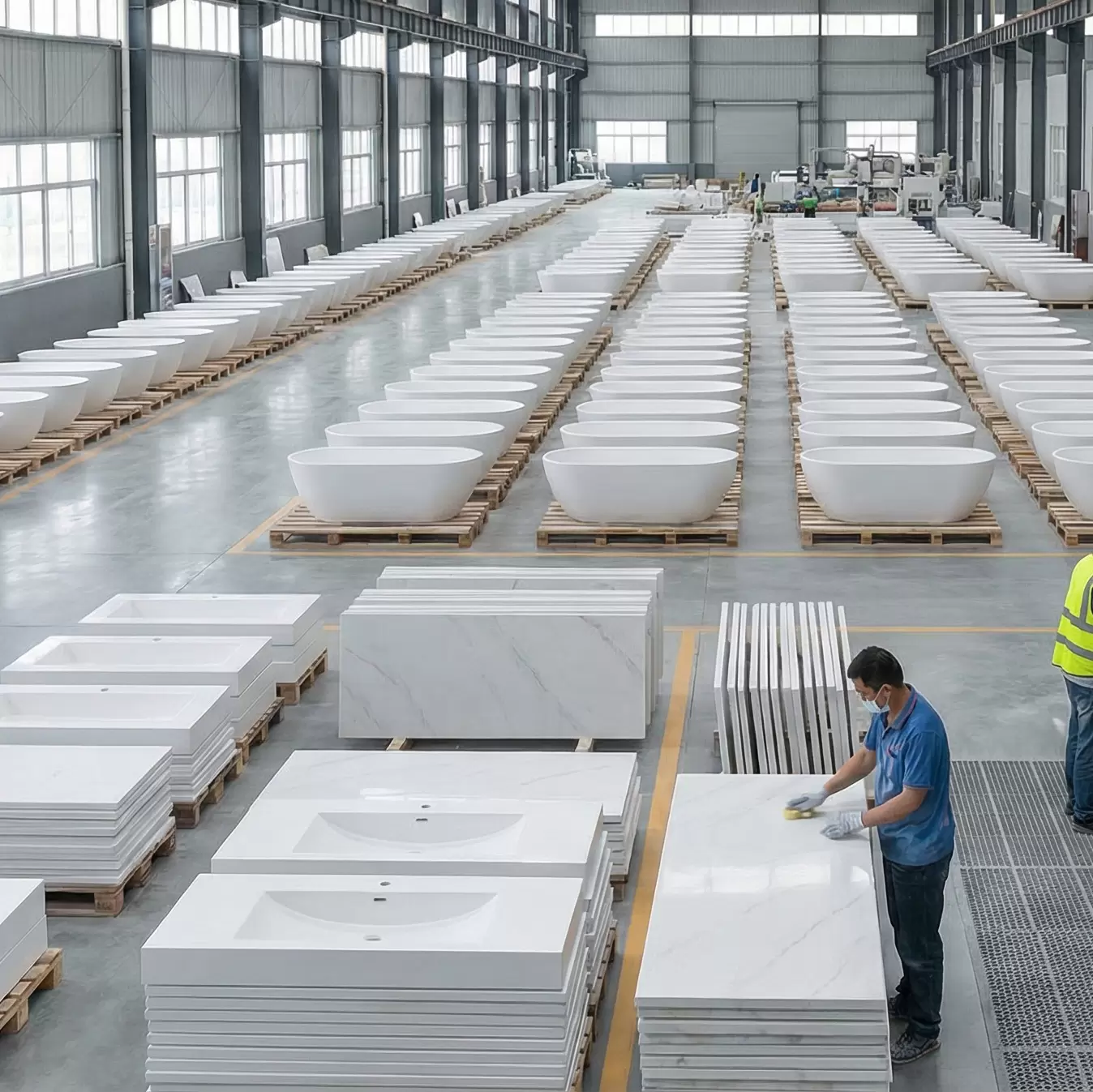
- Seamless integrated sink options. Solid surface can be thermoformed to create a fully integrated vanity top and undermount sink / countertop basin in a single piece. With no seam between the bowl and the deck, there is nowhere for water or bacteria to collect — a practical advantage that tile and stone simply cannot match at a comparable price point.
- Repairable in place. Light scratches, scuffs, and minor chips can be wet-sanded with 400–600 grit sandpaper and buffed back to the original finish without removing or replacing the countertop. This repairability significantly lowers the long-term cost of ownership compared to tile or natural stone, which typically require full section replacement when damaged.
- Fully customizable. Solid surface can be fabricated in virtually any shape, size, or edge profile. Whether you need an unusually narrow vanity top, a curved run, or a specific cutout for a vessel sink, a fabricator can cut and thermoform it to exact specifications. Color options span solid tones, terrazzo-style aggregates, and stone-look patterns.
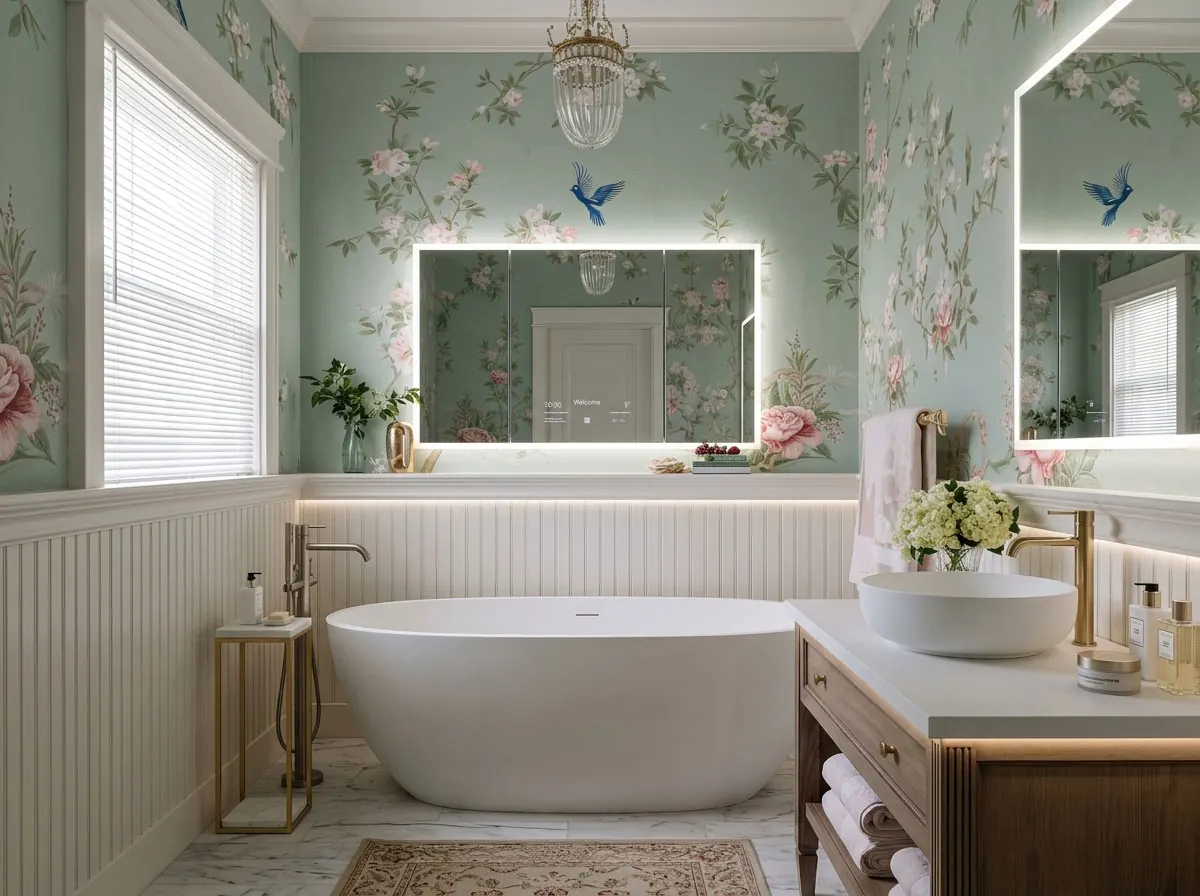
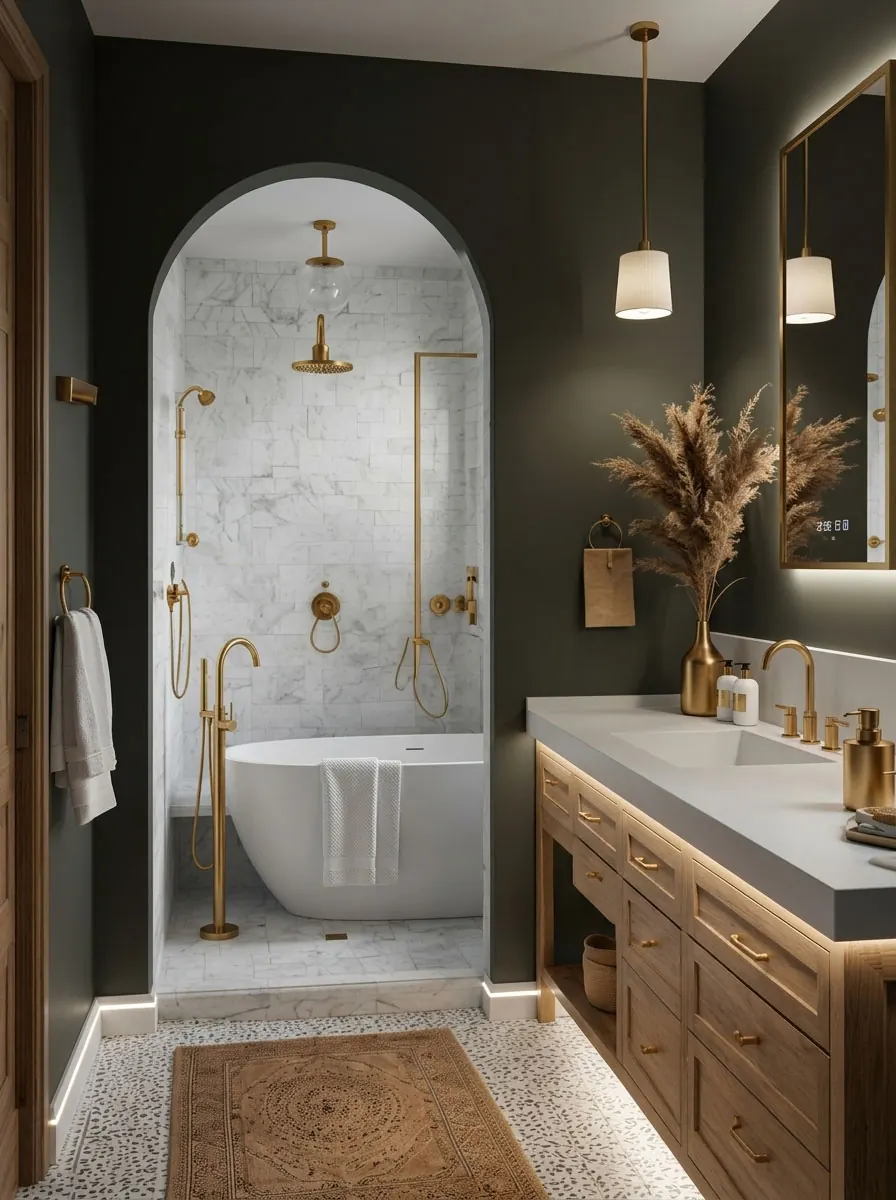
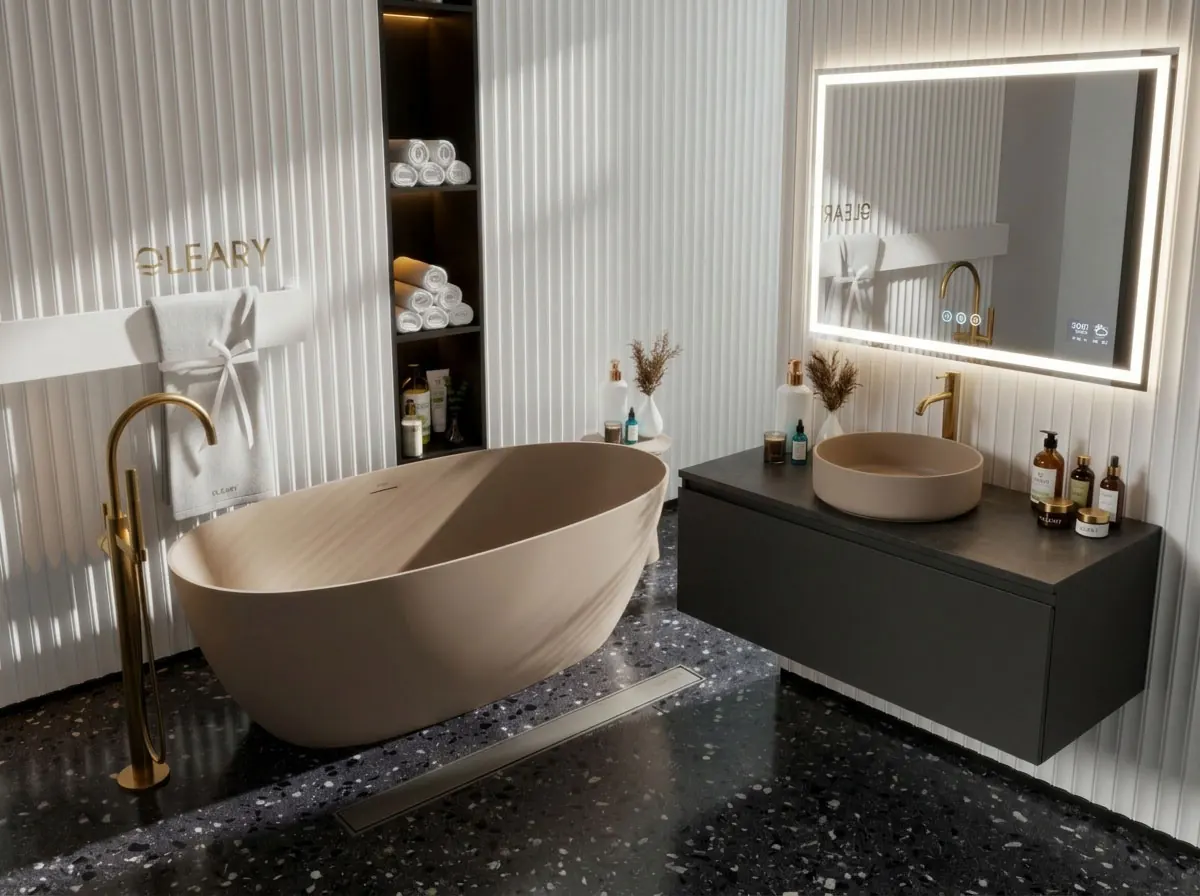
- Design cohesion across the bathroom. The same material can extend from the vanity top to windowsills, shower niches, or wainscoting — creating a unified look that is difficult to achieve with natural stone at the same budget. At OLEARY, we see this applied frequently in hotel and boutique spa renovations where visual consistency across wet zones matters.
Cons of Solid Surface Bathroom Countertops
- Heat sensitivity. Solid surface is rated for intermittent contact up to roughly 212°F (100°C), but repeated or sustained heat — from a flat iron, curling wand, or hot styling tool — can cause discoloration or slight surface distortion. Always use a heat-resistant mat. By comparison, quartz and natural stone tolerate heat better in daily use.
- Softer than stone. With a Rockwell hardness lower than quartz or granite, solid surface can be scratched by abrasive scrubbing pads and harsh cleaning powders. Standard bathroom cleaning with a soft cloth and non-abrasive cleaner prevents most surface wear, but it requires a bit more care than stone.
- Higher upfront cost than entry-level options. Installed solid surface typically runs $75–$120 per linear foot depending on thickness (usually ½ inch or ¾ inch) and edge detail, placing it above acrylic and laminate but generally below premium quartz or natural stone. The repairability factor means that gap often closes over a 10–15 year ownership period.
- Visible seams on very long runs. Runs longer than approximately 144 inches may require a seam. A skilled fabricator can make these nearly invisible, but they will never be fully seamless the way a quartz slab is on shorter spans.
Solid Surface vs. Quartz for a Bathroom Vanity
Quartz surfaces are harder, more heat-resistant, and generally lower maintenance for a hands-off owner. Solid surface wins on fabrication flexibility — integrated sinks, curved edges, and custom shapes are straightforward with solid surface and expensive or impossible with quartz. For a standard rectangular vanity top with a separate undermount basin, quartz is a practical alternative. For an integrated one-piece vanity top, solid surface has no practical rival at a comparable price.
Is Solid Surface a Good Long-Term Investment for a Bathroom?
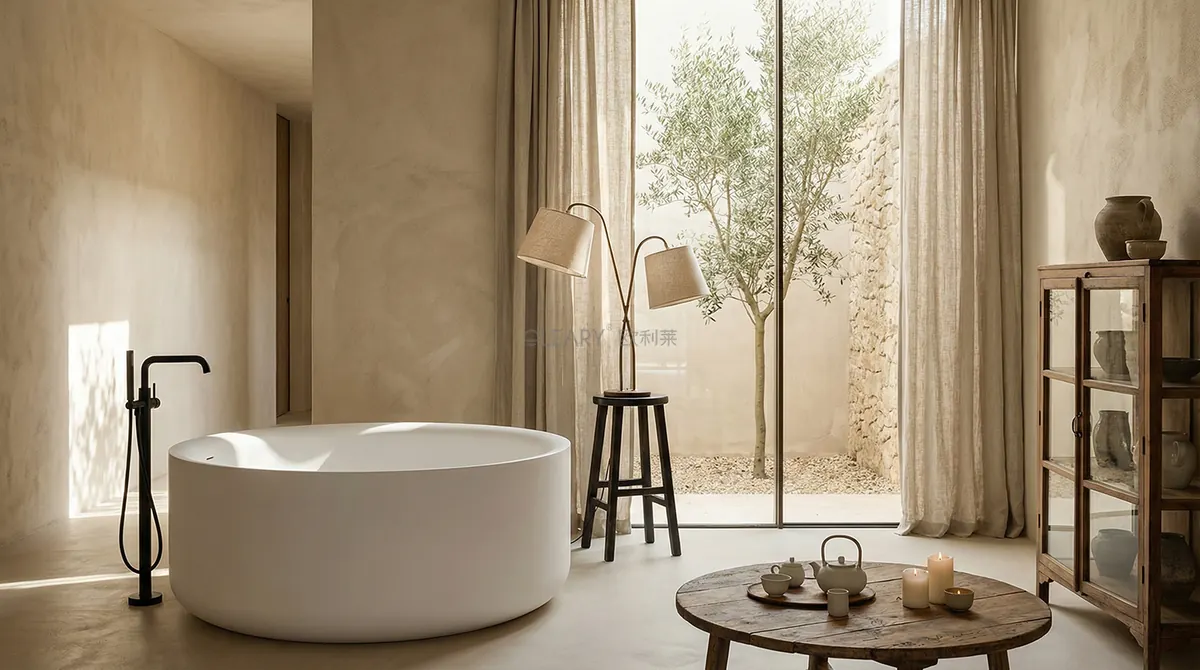
Yes, for most homeowners. The combination of zero-porosity hygiene, repairability, and design flexibility makes it a durable and cost-effective choice over a 10–20 year horizon. Projects that pair a solid surface vanity top with a solid surface bathtub achieve a cohesive, grout-free wet zone that is genuinely easier to keep clean than tiled or stone-heavy bathrooms. If budget allows, it is worth investing in ¾-inch thickness over ½-inch for better impact resistance and a more substantial feel.
Related Questions
How do you repair a scratch or chip in a solid surface countertop?
For light surface scratches, wet-sand the area with 400-grit sandpaper using circular strokes, then follow with 600-grit and finish with a non-abrasive polishing compound. For deeper chips, a fabricator can fill the void with color-matched solid surface adhesive and sand it flush. Because the color runs through the full thickness of the material — typically ½ inch or ¾ inch — the repair blends well and the surface can be restored to near-original condition without replacing the countertop.
Can solid surface countertops be used in a commercial or hotel bathroom?
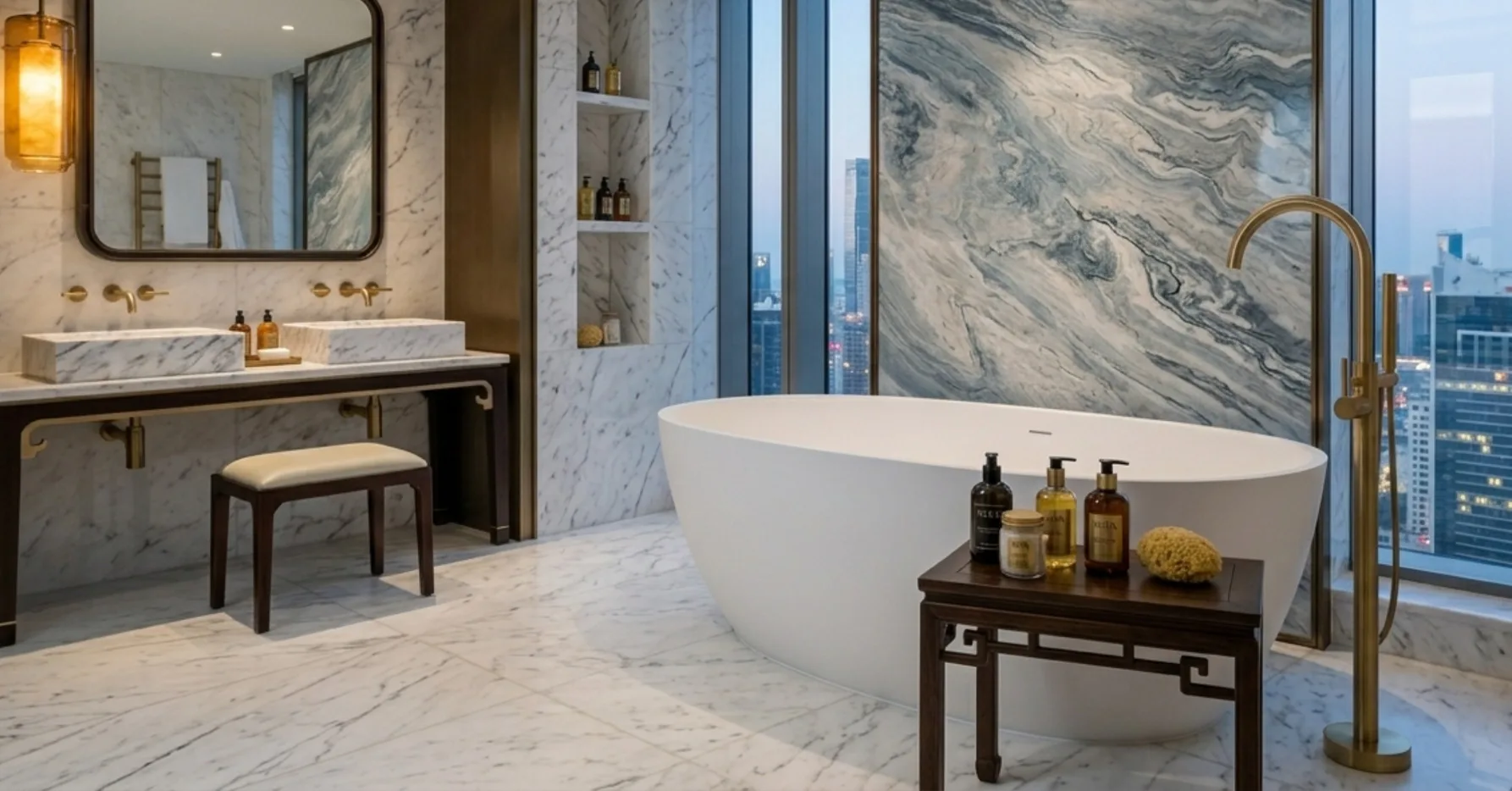
Yes, and they are widely specified for exactly that application. The seamless, non-porous surface simplifies daily cleaning and meets hygiene standards in high-traffic environments. The repairability factor is particularly valuable in commercial settings, where surface wear is accelerated — a maintenance team can sand out scuffs without shutting down a room for countertop replacement. OLEARY works directly with hospitality clients through our hotel partnership program, supplying coordinated solid surface vanity tops, basins, and solid surface bathtubs for full-room bathroom packages.
How does solid surface compare to quartz for a bathroom vanity top?
Quartz is harder (rated 7 on the Mohs scale vs. roughly 3–4 for solid surface), more heat-resistant, and requires almost no maintenance. Solid surface is more fabrication-friendly: integrated sinks, thermoformed curves, and fully custom shapes are standard capabilities, whereas quartz requires a separate undermount basin and cannot be curved. Solid surface is also repairable in the field; a deep scratch in quartz typically cannot be sanded out. If design flexibility and a seamless integrated vanity top are priorities, solid surface is the stronger choice. If maximum hardness and heat tolerance matter more, quartz has the edge.