


Cast Polymer vs. Solid Surface Vanity Top: Pros, Cons, and Which to Choose
Cast polymer vanity tops use a polyester resin and calcium carbonate mix with a protective gel-coat surface, making them 15–30% less expensive than solid surface but more prone to chipping and yellowing over time. Solid surface is an acrylic-mineral composite that runs homogeneous all the way through — more durable, fully repairable by sanding, and better suited to long-term installations.
How Each Material Is Made
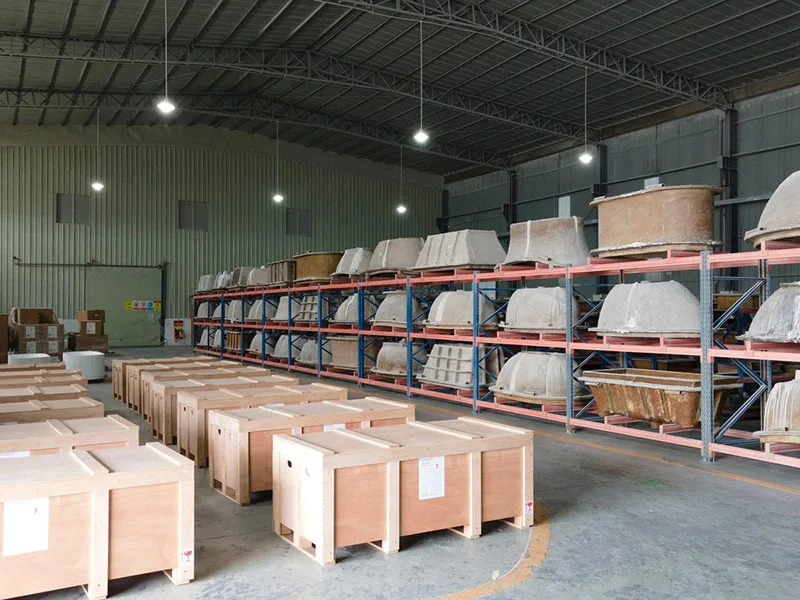
Cast polymer (which includes cultured marble and cultured granite) is manufactured by pouring a liquid resin-mineral mixture into a mold, then applying a gel coat on top. That gel coat is what gives the finished surface its shine and color — but it is also the material's main vulnerability. Once the gel coat chips, the underlying composite is exposed and harder to restore.
Solid surface material — brands like Corian, Wilsonart, and similar composites — is an acrylic or polyester resin blended with mineral fillers throughout the entire slab. Because the color and texture run all the way through, surface scratches and minor damage can be sanded and buffed out without visible patching.
Cost Comparison
Cast polymer vanity tops typically run $150–$400 for a standard 49-inch single-sink top, depending on profile and finish. Comparable solid surface tops generally fall in the $250–$600 range. For a multi-bathroom renovation or a rental property project, that 15–30% difference adds up quickly across several units.
Durability and Repairability
This is where the two materials diverge most clearly:
- Cast polymer: The gel coat surface can chip under impact and will yellow noticeably over 8–15 years, especially with exposure to UV light or harsh cleaners. Chips and cracks in the gel coat cannot be sanded — they require a gel-coat repair kit, and the result is rarely invisible.
- Solid surface: Resists chipping better and, because the material is uniform, light scratches can be removed with fine-grit sandpaper (typically 220–400 grit) and a buffing compound. A properly maintained solid surface top can realistically last 20+ years in a primary bathroom.
Aesthetics and Sink Integration
Cast polymer is available in a wide range of stone-look finishes — veined marble patterns, speckled granite looks, and solid colors — at a lower price point. Most cast polymer tops come with the sink bowl already molded in, which keeps joints to zero but limits your layout options.
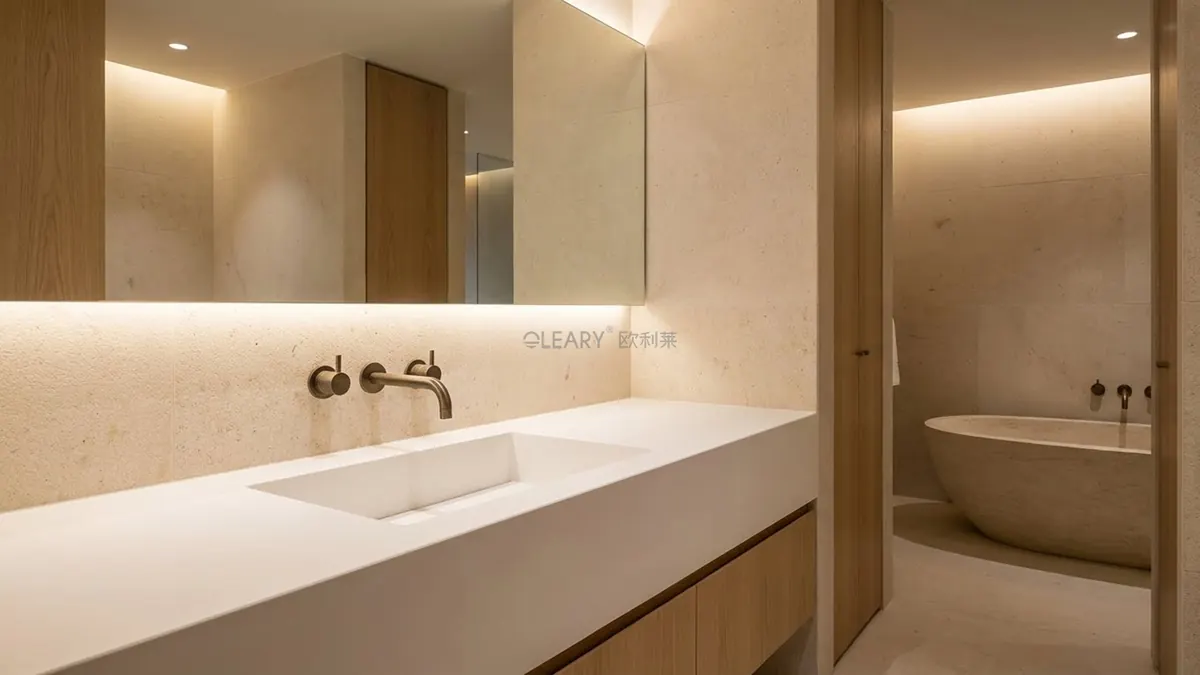
Solid surface supports seamless undermount sink and countertop basin configurations where the bowl and deck are bonded without a visible seam or caulk line. For a clean, contemporary vanity design, that joint-free integration is a meaningful advantage.
Maintenance and Cleaning
Both materials are non-porous, so neither requires sealing and neither harbors bacteria or mold at the surface level. The key difference is in cleaning chemistry:
- Cast polymer requires gel-coat-safe cleaners — pH-neutral, non-abrasive formulas. Bleach-based or abrasive cleaners will dull and eventually damage the gel coat.
- Solid surface tolerates slightly more aggressive cleaning when needed. Most manufacturers allow diluted bleach solutions for stain removal, followed by a rinse.
Which Material Fits Your Project?
Cast polymer is a practical choice for guest bathrooms, rental property renovations, and budget-conscious remodels where the aesthetic look of stone matters more than long-term repairability. It delivers a polished finish at an accessible price.
Solid surface is the stronger choice for primary bathrooms, high-traffic family bathrooms, and commercial settings where durability and a long service life justify the higher upfront cost. At OLEARY, we work with hotel operators and developers who routinely specify solid surface vanity tops because the material holds up to daily heavy use without degrading visually over time — a key concern for any hotel partnership where guest experience depends on consistent appearance across hundreds of rooms.
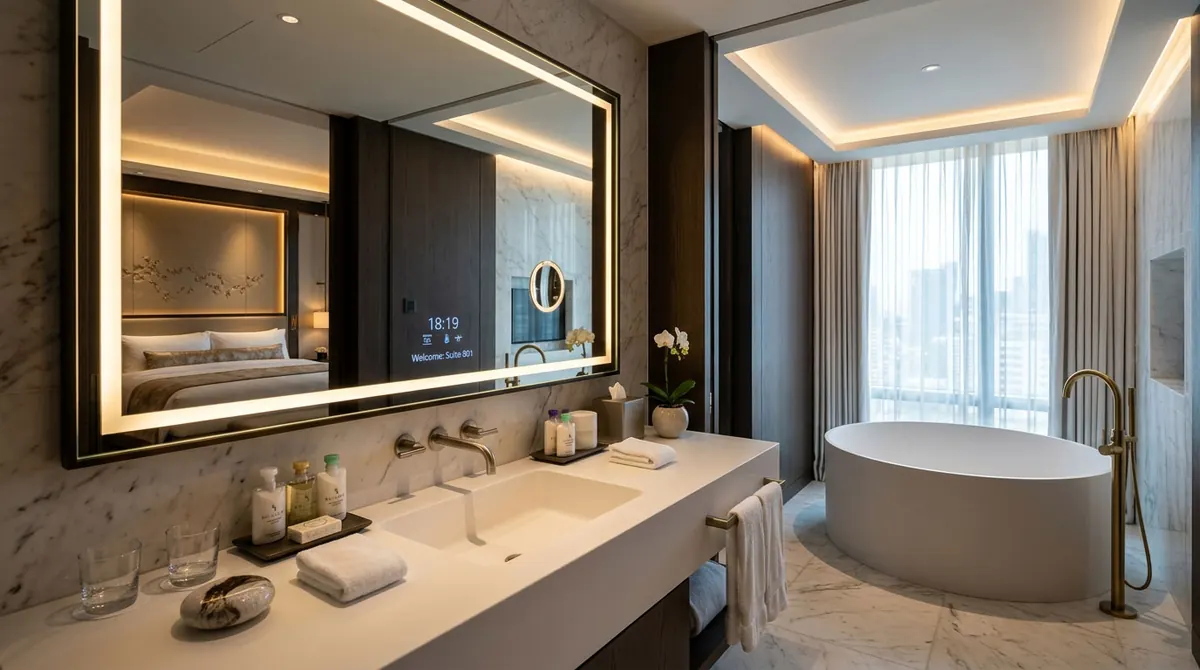
For projects that also involve freestanding or built-in tub selection alongside vanity tops, it helps to think about material consistency across surfaces. A solid surface bathtub pairs naturally with a solid surface vanity top to maintain a unified look and a consistent maintenance routine.

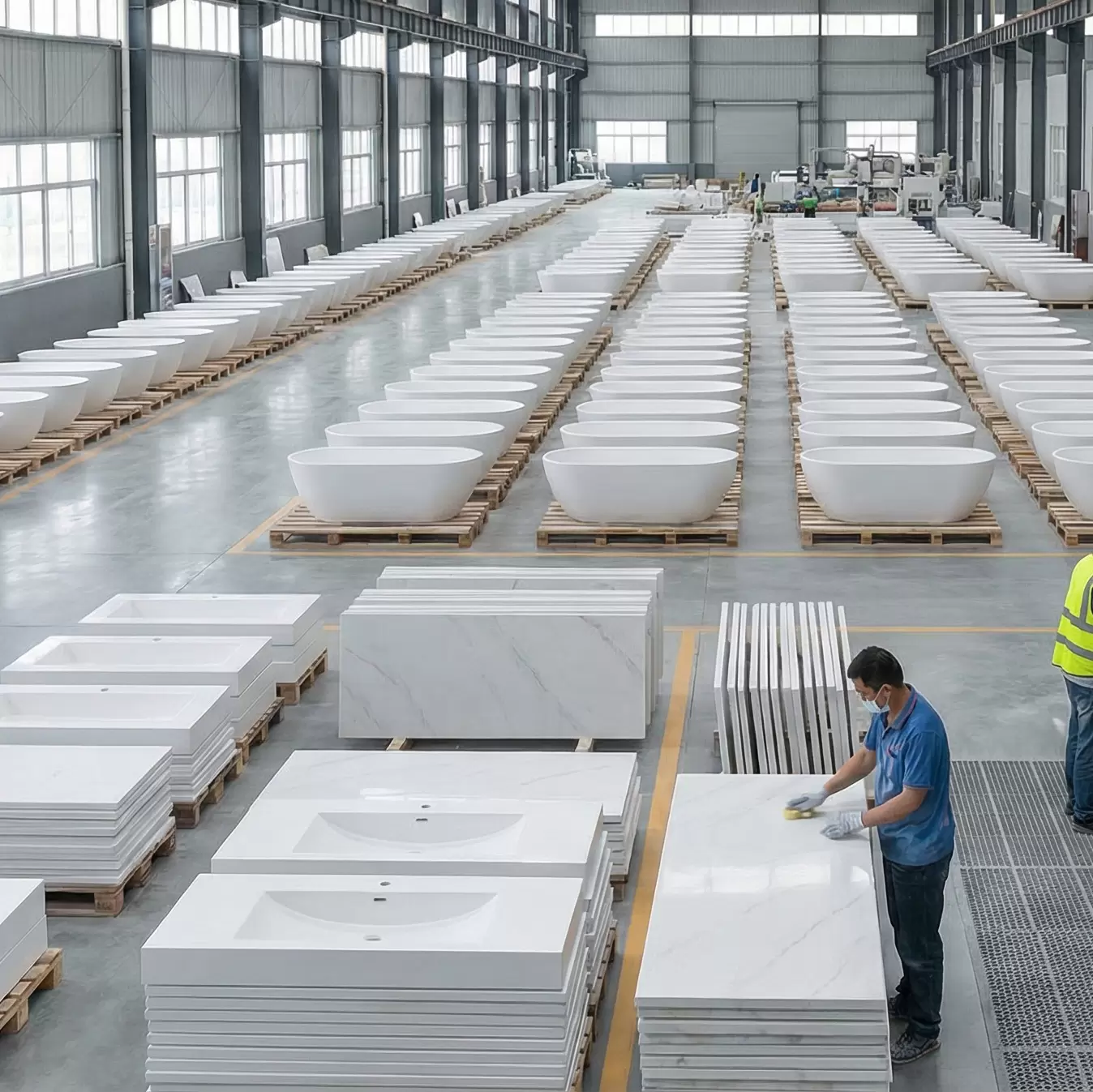
If you are sourcing vanity tops for a larger project — multi-unit residential, hospitality, or commercial development — wholesale bathtubs and vanity components are available through OLEARY with volume pricing. For custom specifications or OEM production needs, explore our bathtub OEM manufacturing capabilities or contact us directly to discuss your project requirements.
Quick Comparison Summary
- Price: Cast polymer lower (by 15–30%); solid surface higher upfront
- Lifespan: Cast polymer 8–15 years typical; solid surface 20+ years with proper care
- Repairability: Cast polymer gel coat is difficult to repair invisibly; solid surface can be sanded and restored
- Sink integration: Both offer integrated bowls; solid surface also supports seamless undermount configurations
- Maintenance: Both non-porous; cast polymer needs gentle pH-neutral cleaners; solid surface tolerates broader cleaning options
- Best for: Cast polymer — budget remodels, rentals, guest baths; solid surface — primary baths, hotels, long-term installations
Related Questions
How long does a cast polymer vanity top typically last?
A cast polymer vanity top will typically last 10–15 years in a residential bathroom with proper care. The limiting factor is the gel coat: it can begin to show yellowing, micro-crazing, or dull patches after 8–12 years, particularly in bathrooms with significant UV exposure or frequent use of abrasive cleaners. High-quality cast polymer with a thicker gel coat layer tends to hold up longer. Solid surface tops, by comparison, have documented service lives of 20–25 years in similar conditions.
Can you repair a chipped or cracked cultured marble sink top?
Yes, but with limitations. Gel-coat repair kits are available and can fill chips and cracks in a cultured marble or cast polymer surface. The challenge is color matching — gel coat tints vary by manufacturer and age, so a repair is often visible on close inspection. Deep cracks that penetrate through the gel coat to the underlying composite are harder to fix durably and may reopen over time. For cosmetic chips in low-visibility areas, a DIY kit is a reasonable fix. For larger damage, replacement is often the more practical long-term solution.
What is the best vanity top material for a high-traffic hotel bathroom?
Solid surface is the preferred specification for hotel bathrooms that see heavy daily use. Its homogeneous construction means scratches and surface wear can be addressed without replacing the entire top, which keeps long-term maintenance costs manageable across a large property. Solid surface also supports seamless integrated sink bowls that eliminate grout lines and caulk seams — both common failure points in hotel bathrooms. OLEARY supplies solid surface bathroom products for hospitality projects; details on volume sourcing are available through our hotel partnership program.