

Solid Surface vs. Tile: Choosing Materials for a Low-Maintenance Bathroom
The core difference comes down to grout. Tile surfaces require ongoing grout cleaning and periodic regrouting; solid surface panels are seamless, eliminating grout lines entirely. For homeowners who want easy-clean bathroom surfaces, using solid surface on walls, vanity tops, and tub surrounds — while keeping tile where impact resistance matters — is the most practical path to a low-maintenance bathroom.
Why Grout Is the Real Maintenance Problem
Most bathroom cleaning frustration traces back to a single source: grout. The porous lines between tiles trap soap scum, hard-water minerals, and mold. Scrubbing them is time-consuming, and no matter how diligently you clean, grout degrades over time and eventually needs to be replaced.
Solid surface material sidesteps the problem entirely. Because panels are fabricated to fit the space and joined with inconspicuous seams rather than open grout lines, there is no porous channel for buildup to take hold. A damp cloth or mild non-abrasive cleaner is typically all the routine maintenance a solid surface wall or vanity top requires.
The practical implication: reducing the total grout area in a bathroom directly reduces the time you spend cleaning it. OLEARY solid surface can be applied to shower walls, tub surrounds, and vanity tops — the surfaces where grout accumulates fastest — to make that reduction meaningful rather than marginal.
Where Each Material Belongs
Solid Surface: Walls, Vanity Tops, and Tub Surrounds
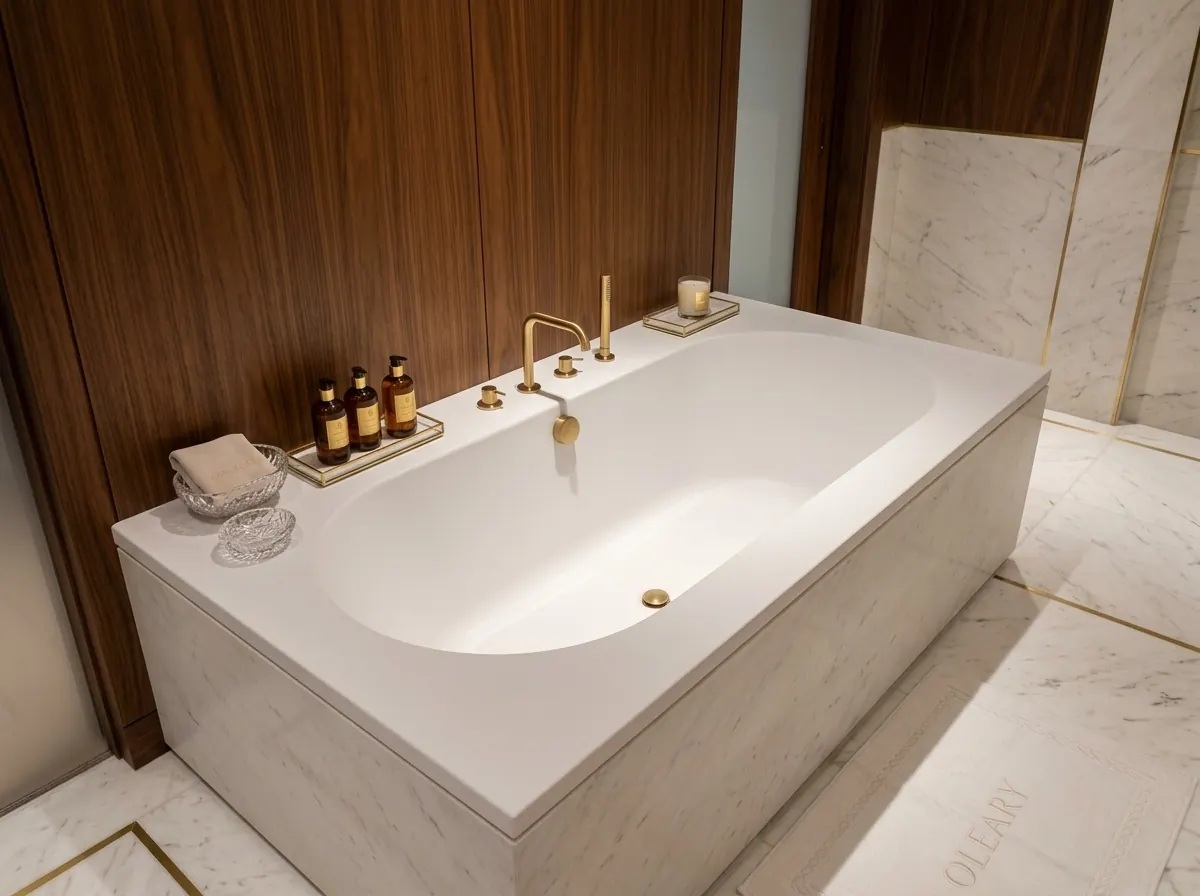
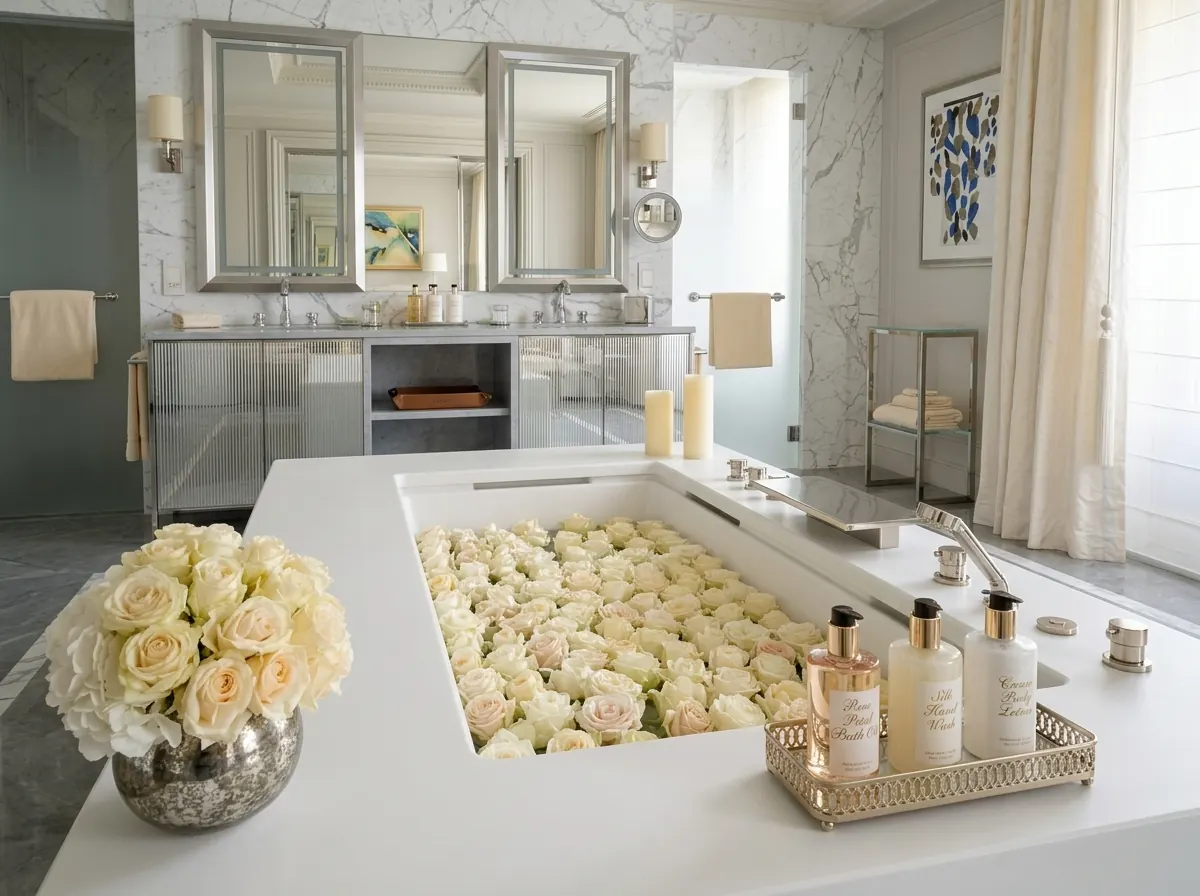
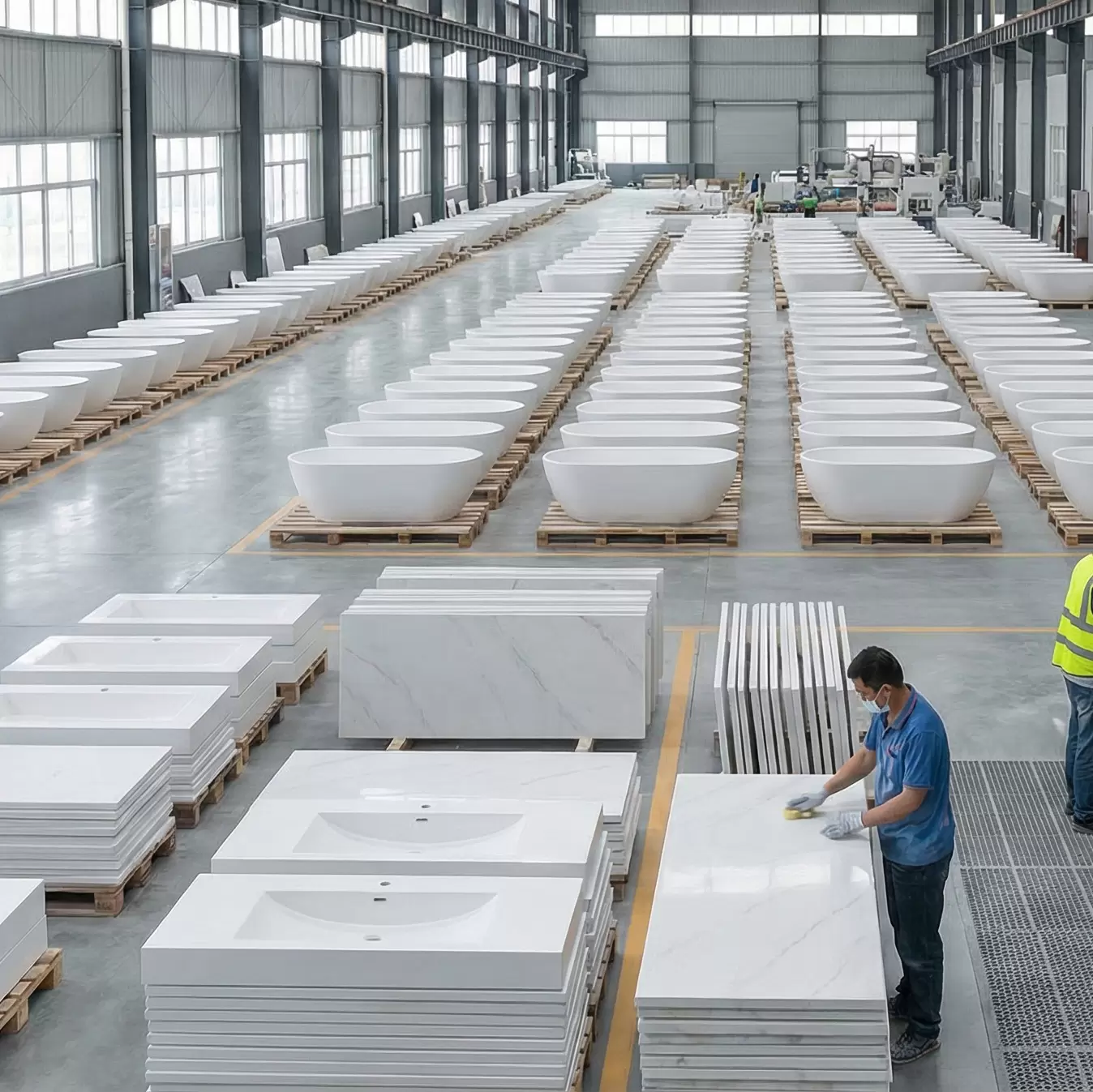
Large, vertical, and frequently wet surfaces are where solid surface delivers the clearest advantage. Shower walls covered in solid surface panels have no grout grid to scrub. A vanity countertop with an integrated undermount sink eliminates the rim joint where grime collects on traditional setups. A custom solid surface bathtub or tub surround keeps the entire bathing zone seamless and easy to wipe down.
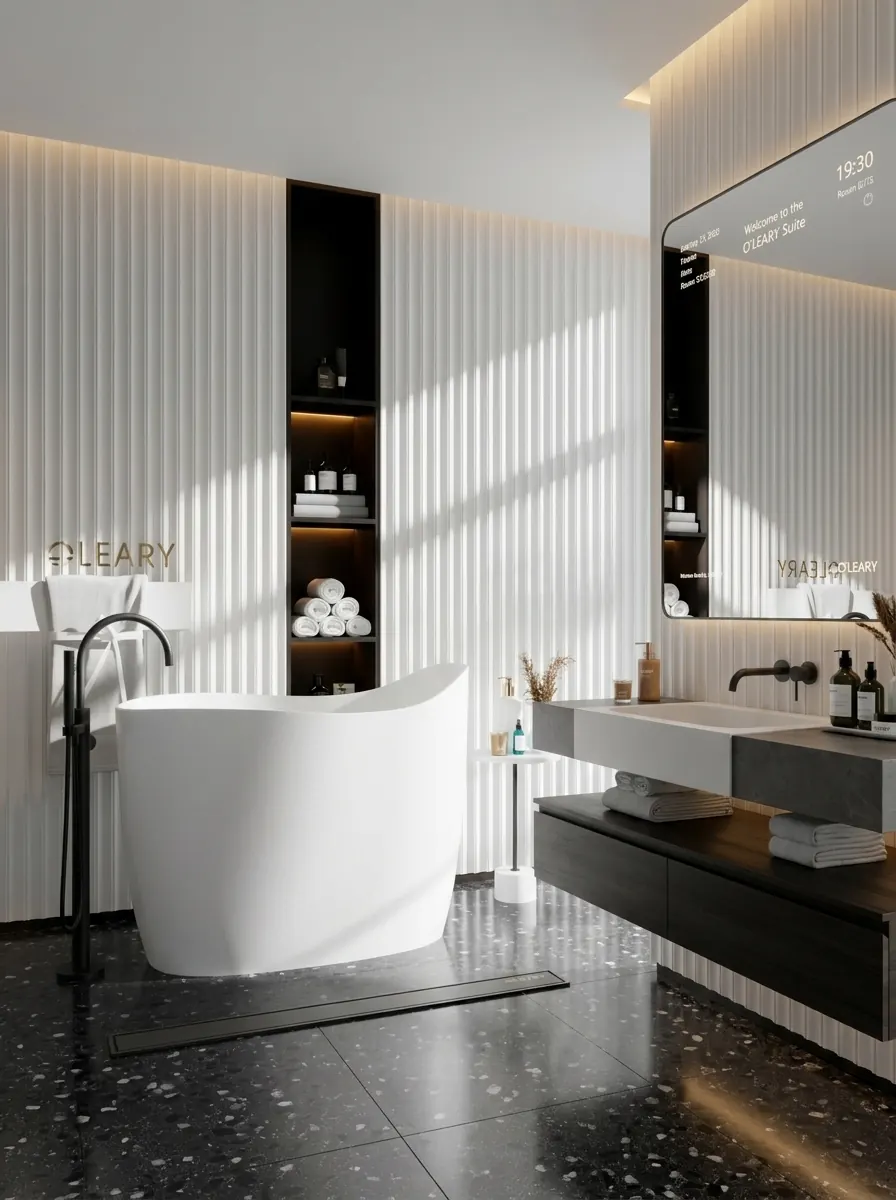
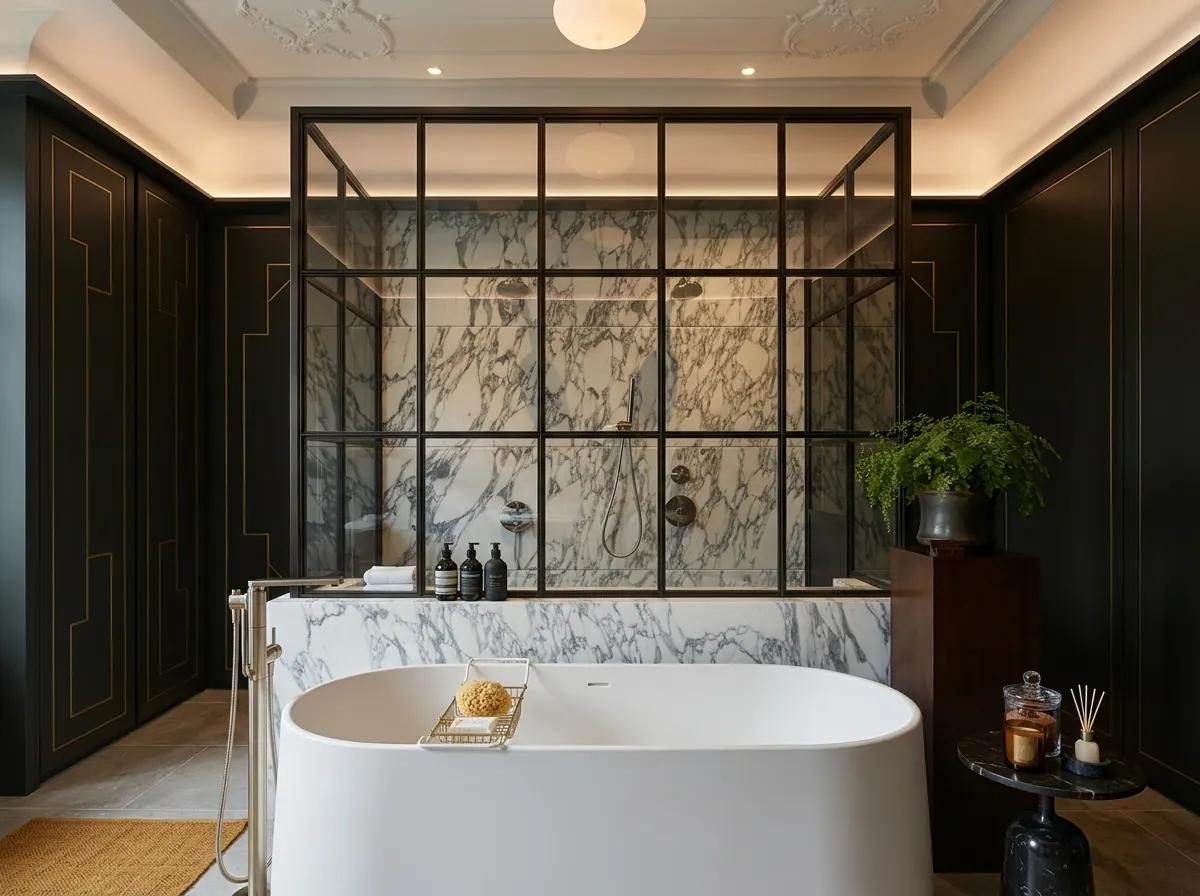
This is what a genuinely grout-free bathroom looks like in practice: the surfaces you touch and wet every day are smooth, non-porous, and require nothing more than a regular wipe.
Tile: Floors and Decorative Accents
Tile still earns its place in the low-maintenance bathroom — just in the right zones. On shower floors, tile provides the texture and slip resistance that a smooth panel cannot. On bathroom floors in general, tile holds up well to foot traffic and the occasional dropped item.
Tile also works well as a deliberate design element. A narrow decorative band of mosaic or patterned tile on a wall that is otherwise clad in solid surface adds visual interest without adding significant grout area. The cleaning burden stays low; the aesthetic range stays wide.
| Surface | Recommended Material | Primary Reason |
|---|---|---|
| Shower walls | Solid surface | Seamless, no grout to clean |
| Tub surround | Solid surface | Continuous surface, easy wipe-down |
| Vanity top | Solid surface | Integrated basin option, no rim joint |
| Shower floor | Tile | Slip resistance, impact durability |
| Bathroom floor | Tile | Impact resistance, foot traffic |
| Decorative wall band | Tile | Design accent, limited grout area |
Key Takeaways for a Low-Maintenance Bathroom
Two principles guide the material decisions above:
- Low-maintenance bathrooms reduce grout area by using solid surface on walls, vanity tops, and tub surrounds; tile is then reserved for floors or small decorative bands.
- If you want a fully tile-free bathroom, waterproofing shifts from the grout lines to the underlying membrane and seam-free solid surface panels.
That second point is worth unpacking. In a conventional tiled bathroom, properly maintained grout contributes to the waterproofing system. When you move to a grout-free bathroom, that role is taken over by two things: a waterproof membrane installed beneath the panels, and solid surface panels that span the surface without open joints. Neither approach is inherently more or less reliable — they are simply different systems, and the grout-free version removes one more item from your ongoing maintenance list.
Putting It Together: A Practical Design Strategy
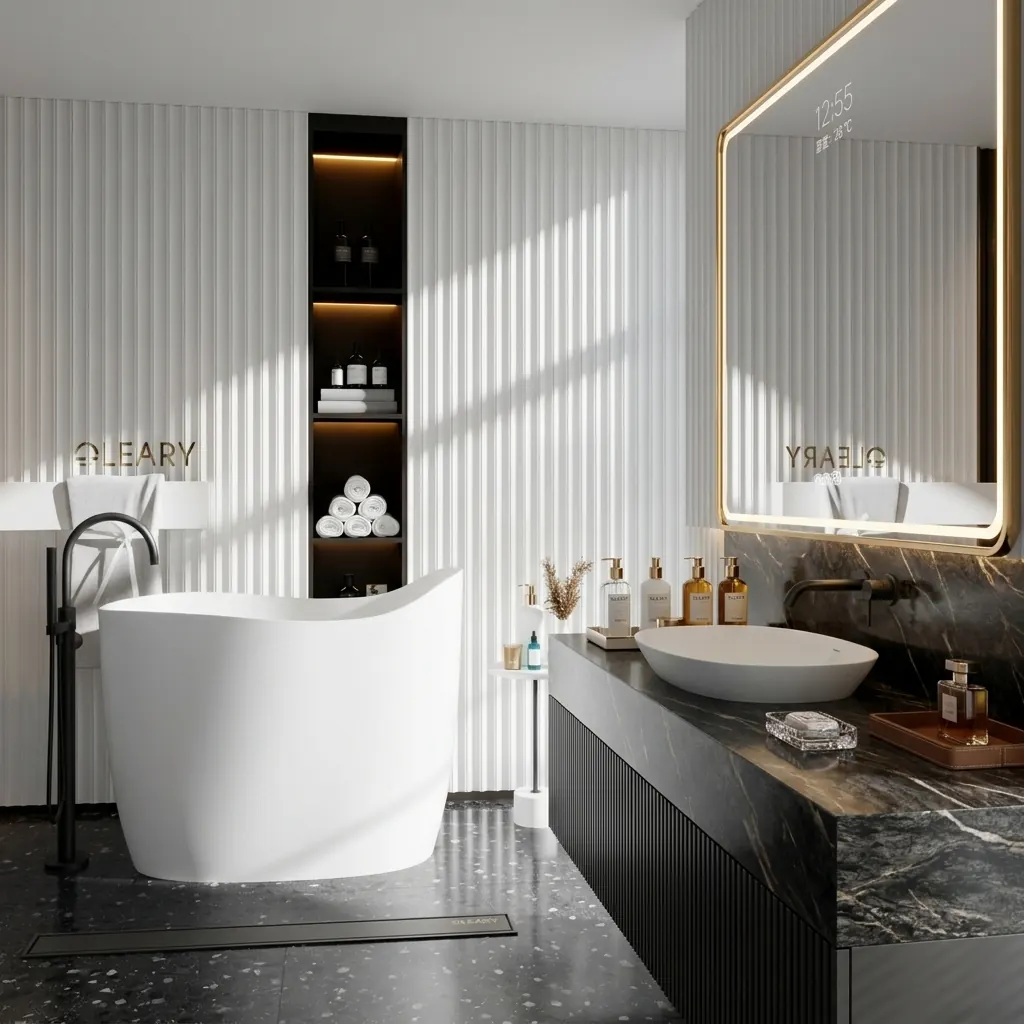
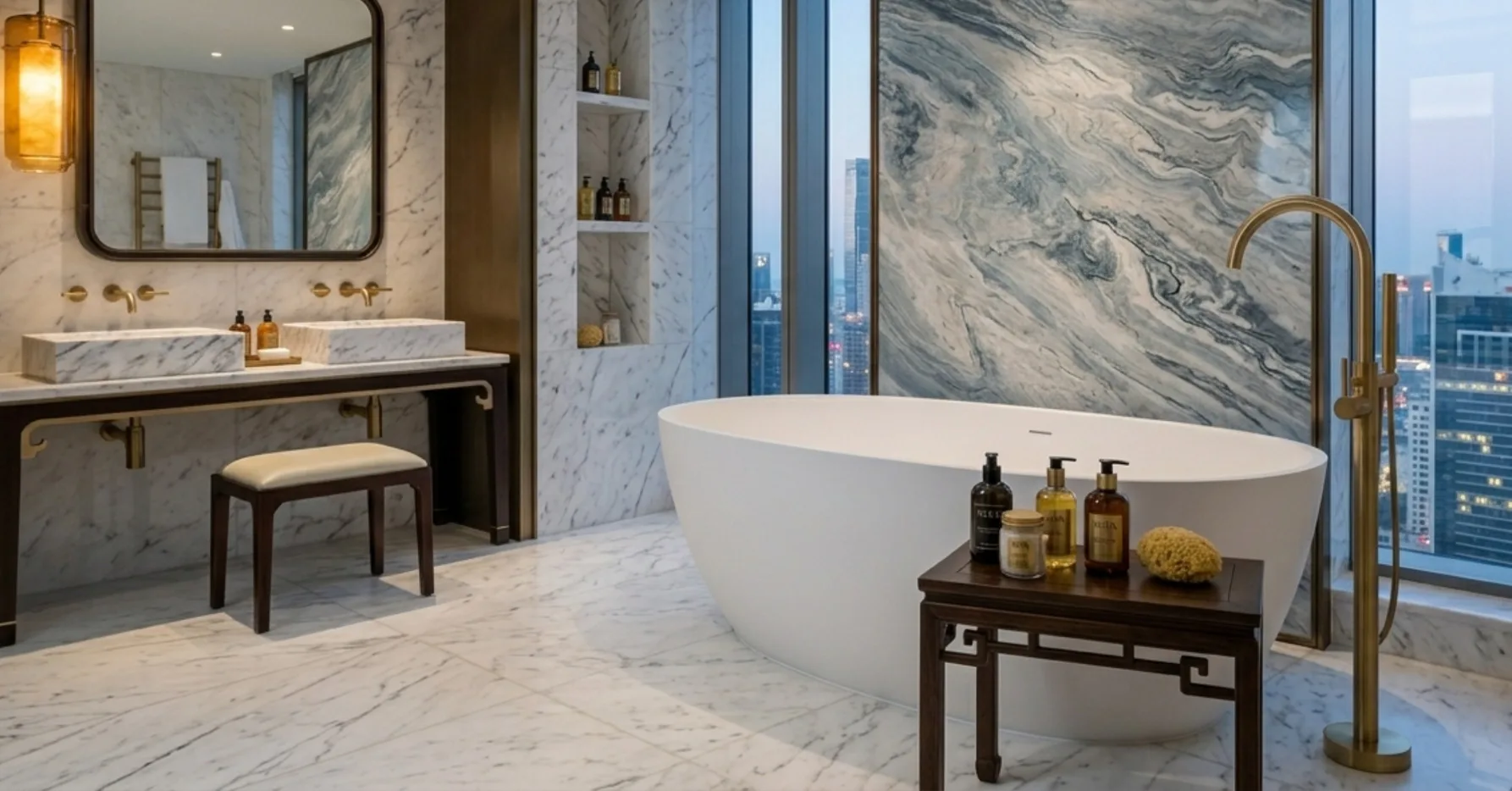
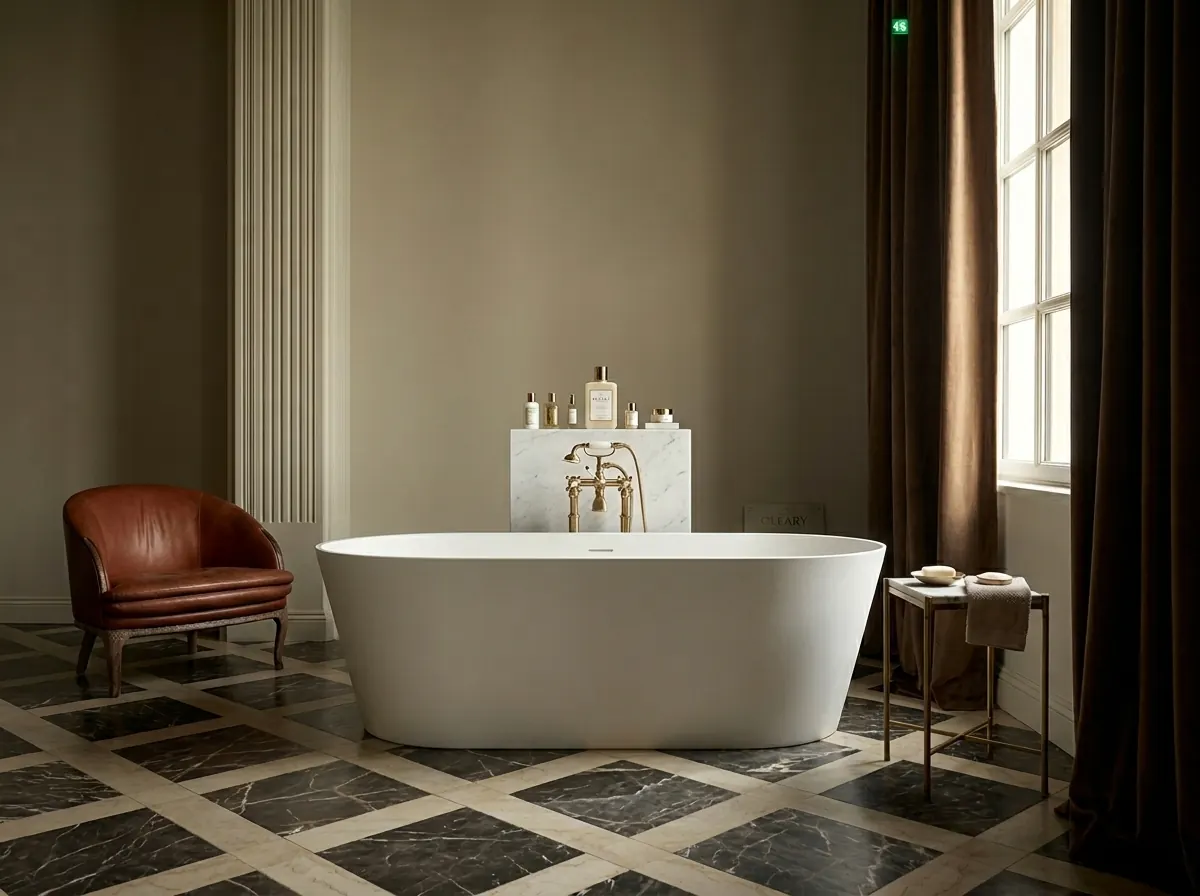
A bathroom designed around low-maintenance bathroom materials does not have to be all-or-nothing. The image above illustrates a workable balance: a freestanding bathtub in solid surface sits on a tiled floor, combining the easy-clean profile of the tub itself with the durability tile provides underfoot.
For the shower, solid surface panels on the walls with tile on the floor achieves the same balance. The result is a bathroom where the surfaces most prone to soap and moisture buildup are seamless, and tile appears only where its physical properties justify the extra cleaning effort.
If you are planning a full renovation or building new, this is the moment to make those decisions deliberately rather than defaulting to tile everywhere. The OLEARY bathroom fixtures catalog covers the full range of solid surface options — from vanity tops to custom tubs — that support this kind of grout-minimizing layout. When you are ready to move from planning to sourcing, request a quote to discuss dimensions, finishes, and project scope with the OLEARY team.