




Matching Your Bathtub, Basin, and Vanity for a Cohesive Look
The most reliable way to match a bathtub, basin, and vanity is to source all three from one manufacturer, in one material, and one color code. When fixtures share the same material composition and production batch, color difference becomes nearly invisible. Any other approach — mixing brands, mixing materials — introduces color variation that is difficult to control and harder to correct on site.

Why Cohesive Bathroom Design Starts With Material
Cohesive bathroom design typically anchors on a single material running across the wet surfaces — the tub surround, the undermount sink and vanity countertop, and the basin itself. When those surfaces share the same solid surface material and color code, the eye reads them as a single, continuous composition rather than a collection of separate purchases.
Solid surface is particularly well suited to this approach. Unlike ceramic or stone, which vary batch to batch by nature, a custom solid surface bathtub can be produced alongside the vanity top and basin using the same formulation. The result is a set that holds together visually in a way that mixed-manufacturer selections rarely achieve.
The Real Problem With Mixing Manufacturers
When fixtures come from different manufacturers, exact color matching is rare — even when the product names sound identical. Each brand calibrates its whites, off-whites, and matte tones to its own production process. Two fixtures both labeled "Arctic White" can look noticeably different under the same bathroom light.
This is the main reason designers and specification professionals choose a single source for all wet surfaces. It removes the guesswork and eliminates the risk of an on-site color discovery that is too late and too expensive to fix.
If specifying from multiple sources is unavoidable, the allowed color tolerance between pieces should be written into the contract before manufacturing begins — not identified when the fixtures are already installed.
Should Fixtures Match Exactly, or Is Contrast Acceptable?
This is the question most homeowners and designers wrestle with early in the planning process, and the answer depends on what is being contrasted.
Contrast in metals and hardware is intentional design. Mixing a matte black tap with brushed brass handles, or pairing polished chrome fittings against a warm stone vanity top, reads as a deliberate choice. It adds dimension to a bathroom without creating visual confusion.
Mismatch in whites between fixtures is a different problem entirely — it is a sourcing mistake, not a design statement. Where hardware contrast signals confidence, mismatched fixture whites signal an oversight. These are two separate issues and should be solved differently: embrace contrast in metals, eliminate it in the core surfaces.

How to Coordinate Bathroom Finishes in Practice
Step 1: Lock in the wet surfaces first
Start by deciding on the material and color for the bathtub, vanity top, and basin as a group — not individually. These three surfaces occupy the most visual real estate in a bathroom and set the tonal foundation everything else responds to. Specifying them together, from the same source, is the most effective way to ensure they read as a coordinated set.
Step 2: Choose hardware as a deliberate contrast layer
Once the core surfaces are locked, hardware and fittings — taps, handles, towel rails, lighting trim — can be selected as a contrasting layer. A warm brass fixture family against a matte white solid surface tub and basin creates a clean, resolved composition. A cooler brushed nickel set works equally well against the same neutral surface. The contrast is what makes both elements look considered rather than accidental.
Step 3: Extend the palette intentionally
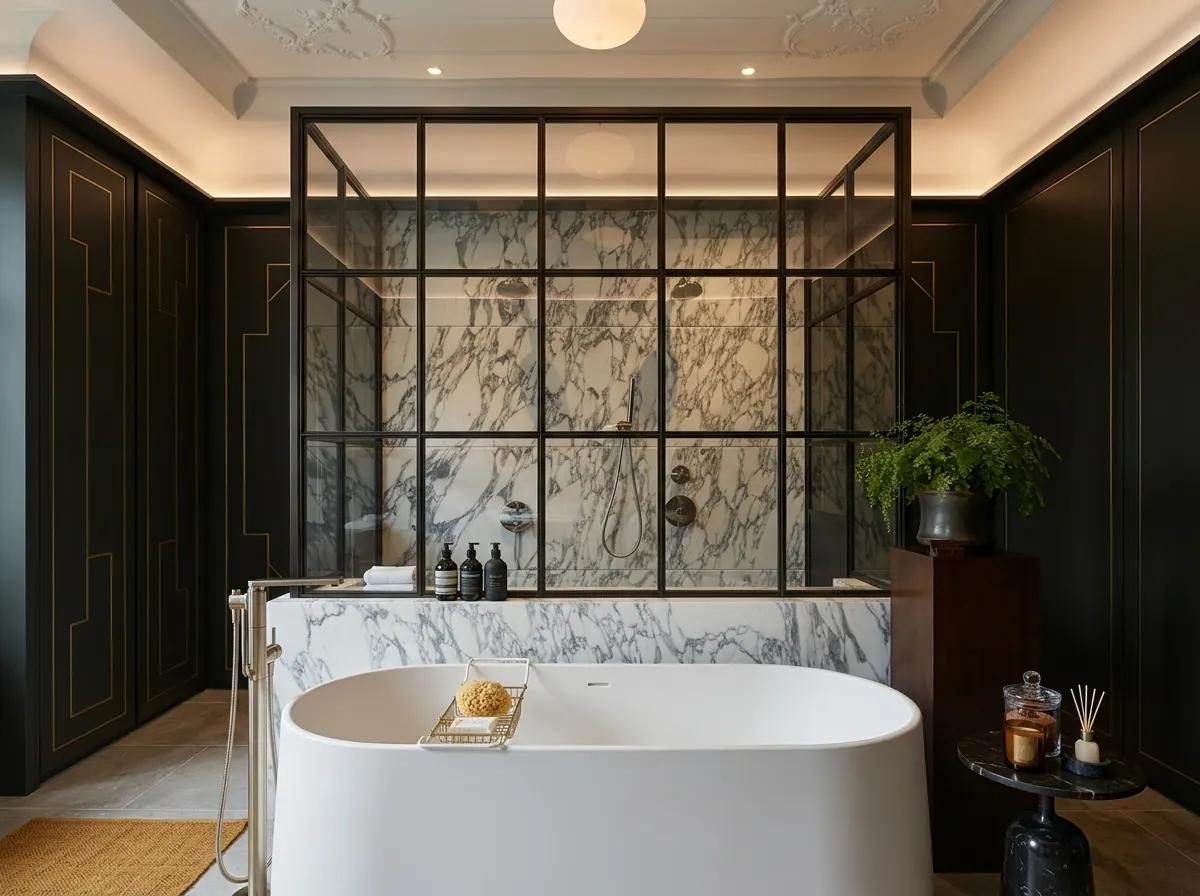
Flooring, wall tile, and cabinetry can introduce texture and variation without breaking the cohesion of the wet surfaces. A wood-toned vanity cabinet under a solid white countertop top, or a dark stone floor beneath a white freestanding tub, adds depth without competing with the surface-level consistency that anchors the room.
A Comparison: Single-Source vs. Multi-Source Specification
| Approach | Color Consistency | On-Site Risk | Design Control |
|---|---|---|---|
| Single manufacturer, one color code | Nearly invisible color difference | Low | High — all pieces produced to spec together |
| Multiple manufacturers, matched by name | Variable — color names differ by brand | High — mismatches often found on site | Limited — tolerance must be contractually defined |
How OLEARY Approaches Coordinated Bathroom Fixtures
At OLEARY, the custom solid surface bathtub, vanity countertop, and undermount basin can all be specified in the same material and color code — for residential projects and hospitality installations alike. A freestanding bathtub in the same solid surface family as the basin and vanity top creates a bathroom where the surfaces feel like one resolved decision, not three separate purchases placed in the same room.
Browse the full bathroom fixtures catalog to see available materials and colors, or request a quote to discuss coordinating a full wet-surface set for your project.