



What Is the Difference Between an Undermount Sink and a Vessel Sink?
An undermount sink is installed below the countertop, flush with the surface, creating a seamless look that makes cleaning effortless. A vessel sink sits on top of the counter as a freestanding basin and acts as a visual centerpiece. The core differences come down to installation method, ergonomics, cleaning ease, and design intent.
Installation and Countertop Compatibility
Undermount sinks are bonded beneath the countertop opening using adhesive and mounting clips. This method requires a countertop material that is solid, waterproof, and capable of holding a clean edge — stone, quartz, and solid surface are the standard choices. A laminate edge will degrade over time where it meets the sink cutout.
Vessel sinks are far more forgiving. Because the basin rests on top of the counter rather than being supported by it, the countertop only needs a small drain cutout. This opens up more material options and makes vessel sinks easier to retrofit into an existing vanity.
Height and Ergonomics
A standard bathroom vanity cabinet sits at 32 to 36 inches. A vessel sink adds another 4 to 6 inches of basin height on top of that, putting the effective rim height at 36 to 42 inches for many installations. That works well for taller users but can feel awkward for children or shorter adults.
To compensate, many designers specify a shorter vanity cabinet — typically 28 to 30 inches — when pairing with a vessel sink. This adds a custom millwork step to the project budget. With an undermount sink, standard cabinet height is almost always the right starting point.
Cleaning and Maintenance
This is where undermount sinks hold a clear practical advantage. Because there is no raised rim between the countertop and the basin, water and debris wipe directly into the sink. There are no crevices where mold or soap residue can accumulate.
Vessel sinks have a perimeter seam where the base of the bowl meets the countertop. That joint requires regular attention — particularly in high-use environments — to prevent staining and mildew. The seal must also be periodically inspected and reapplied depending on the material.
Aesthetics and Design Context

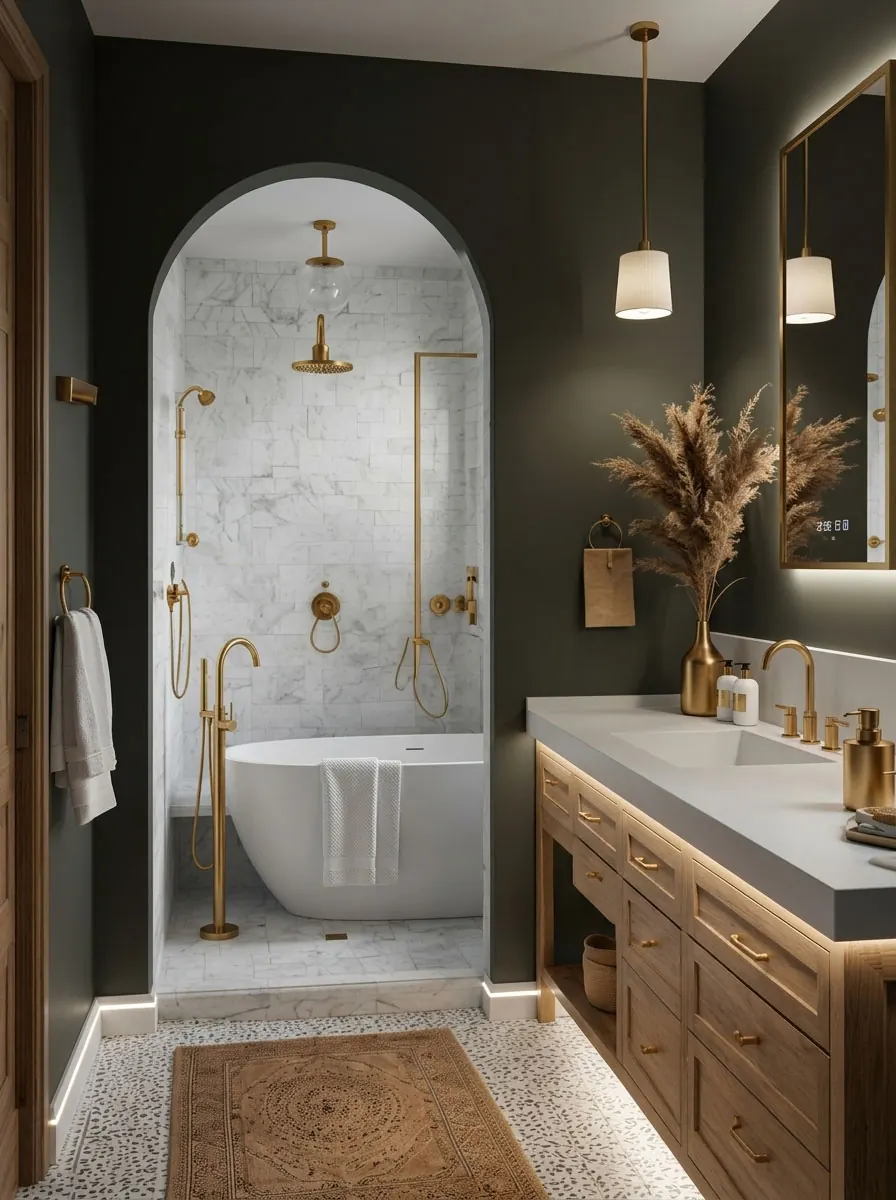
Vessel sinks are inherently expressive. A stone, ceramic, or resin bowl sitting on top of a vanity draws the eye and anchors the aesthetic of the room, working especially well in modern, spa-inspired, or boutique-hotel bathrooms where the basin is meant to be noticed. Paired with wall-mounted or tall deck faucets and complementary fixtures — like the brass and gold combination shown above — they create a layered, curated look.
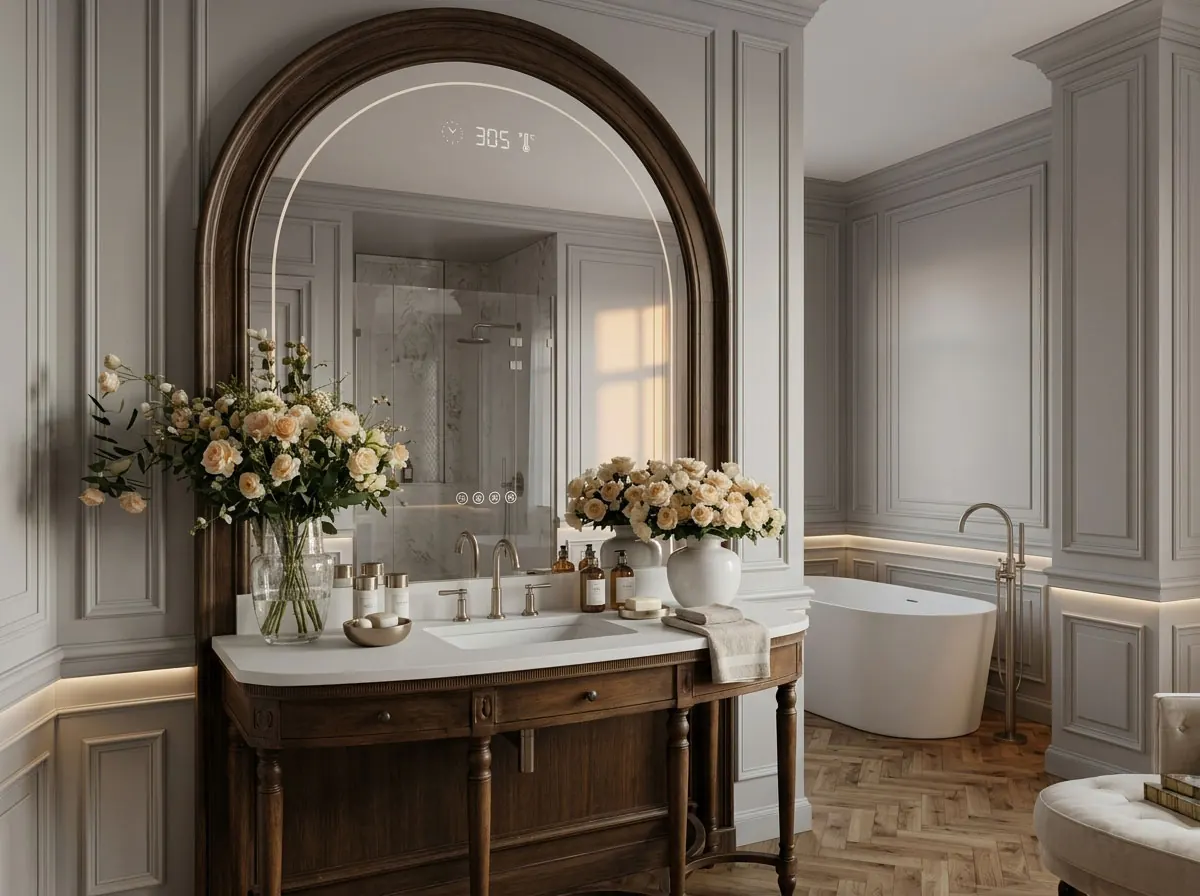
Undermount sinks support a cleaner, more restrained aesthetic. The countertop surface reads as uninterrupted, which suits transitional and contemporary spaces where the material itself — a veined marble or honed quartz — is the visual statement. The sink recedes; the surface speaks.
Hotel, Airbnb, and Commercial Applications
For hospitality and short-term rental projects, the choice usually comes down to housekeeping efficiency versus design impact. Undermount sinks are generally the practical default in hotel properties that prioritize quick, thorough cleaning between guests. The seamless counter surface can be wiped down in seconds with no risk of dislodging a caulk bead or missing a seam.
Vessel sinks earn their place in boutique properties and design-forward Airbnbs where the bathroom is part of the guest experience. The trade-off in cleaning time is accepted because the visual return — a sculptural basin, an elevated counter, a cohesive aesthetic — is part of what guests are paying for. OLEARY works with both independent designers and hospitality operators through our hotel partnership program to match the right specification to each project type.
Quick Comparison: Undermount vs Vessel Sink
- Installation: Undermount bonds below the counter; vessel rests on top with a drain cutout only.
- Countertop requirement: Undermount needs stone, quartz, or solid surface; vessel is material-flexible.
- Effective basin height: Vessel adds 4–6 inches over vanity height; undermount does not.
- Cleaning: Undermount is faster and more hygienic — no perimeter seam.
- Design role: Vessel is a focal point; undermount is subordinate to the countertop surface.
- Best for hospitality: Undermount for housekeeping efficiency; vessel for boutique aesthetics.
Related Questions
What countertop material works best with an undermount sink?
Stone (marble, granite), engineered quartz, and solid surface are the most reliable choices. All three accept a polished or eased edge profile that sits cleanly against the sink rim, and none will degrade when exposed to water at the cutout. Quartz is the most low-maintenance of the three. Laminate and wood are not recommended — the exposed edge will absorb moisture over time and eventually fail. Countertop thickness of at least ¾ inch is standard; thicker slabs (1¼ inch) give a more substantial visual edge.
How high should a bathroom vanity be for a vessel sink?
The target finished rim height — the top of the vessel basin — is typically 36 to 38 inches for average adult users. Since a vessel sink adds 4 to 6 inches of height, the vanity cabinet itself should be built or selected at 30 to 33 inches rather than the standard 32 to 36 inches. Confirm the exact basin height before ordering cabinetry. If you are specifying a project for users of varying heights, 34 inches to the finished rim is a reasonable middle ground. Always coordinate faucet height at the same time — a vessel faucet needs enough clearance to fill the bowl comfortably.
What is an integrated sink top and how does it differ from an undermount sink?
An integrated sink top is a single continuous piece in which the basin and countertop are formed from the same material — typically solid surface, stone resin, or ceramic. There is no seam at all, which makes it even easier to clean than an undermount sink and virtually eliminates joint failure over time. An undermount sink has a visible joint line at the counter edge, even when well-sealed. Integrated tops cost more upfront due to the custom fabrication involved, but they are increasingly popular in hospitality and high-spec residential projects. OLEARY offers custom specifications — contact us to discuss options for your project.