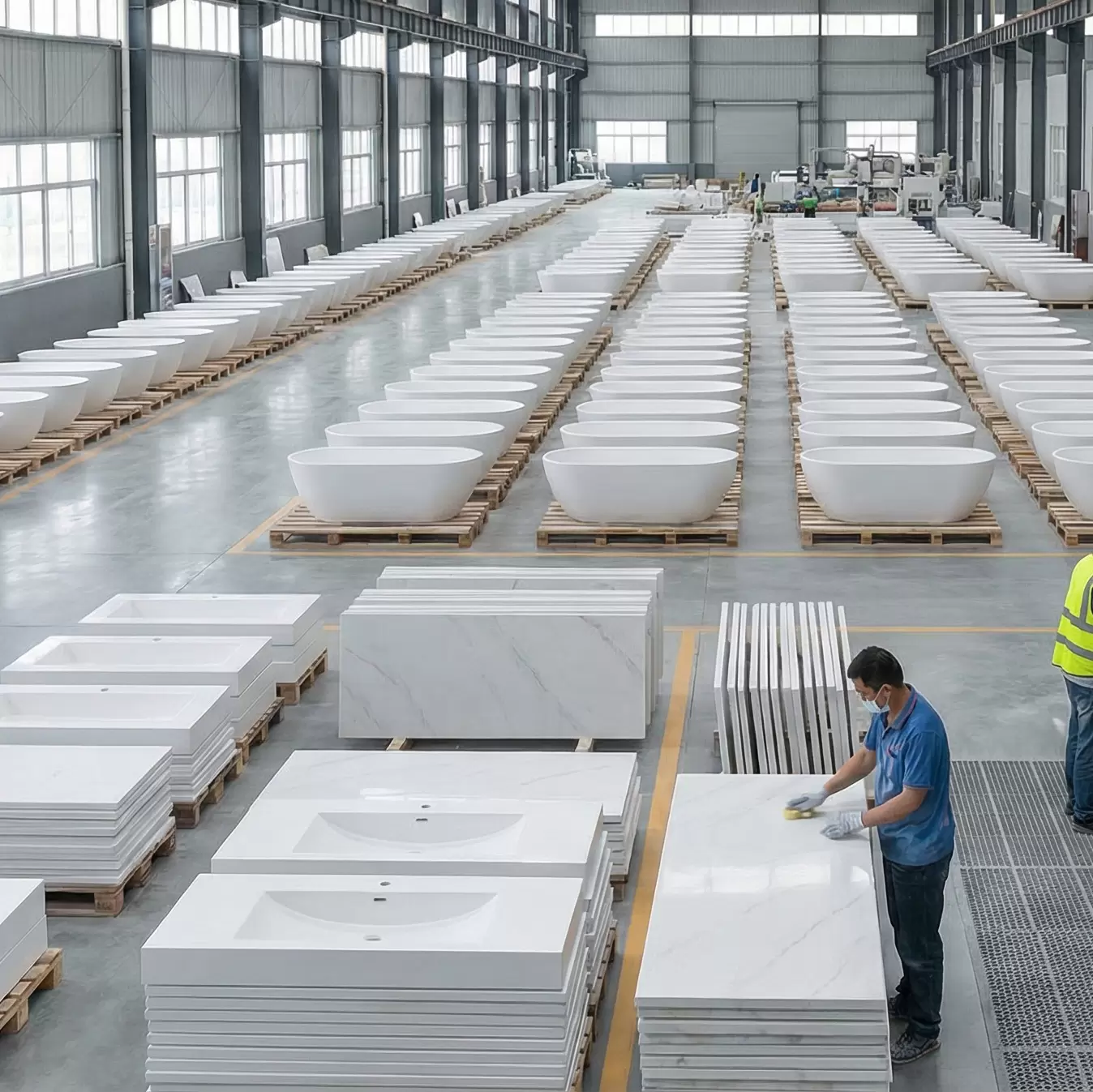
OEM/ODM Bathtub Manufacturing for Hotel Chains: What Developers Should Know
For hotel developers sourcing bathroom fixtures at scale, understanding the difference between OEM and ODM manufacturing is the first decision that shapes cost, timeline, and brand consistency. OEM (Original Equipment Manufacturer) means you supply the design and the factory produces it to your specification. ODM (Original Design Manufacturer) means the factory offers existing designs you can adapt and brand as your own. Choosing correctly depends on your project scope, budget, and how much design control your brand requires.
OEM vs. ODM: The Core Difference for Hotel Procurement
The distinction matters more than it might seem when you are specifying bathtubs, vanity tops, and undermount basins across dozens or hundreds of guestrooms. A misstep early in the sourcing process creates costly revisions mid-production.
| Factor | OEM | ODM |
|---|---|---|
| Design origin | Buyer supplies the design | Manufacturer supplies base designs |
| Customization depth | Full — geometry, color, texture, dimensions | Moderate — color, finish, minor form adjustments |
| Typical use case | Flagship properties, branded residential lines | Mid-scale rollouts, budget-controlled refits |
| Lead time | Longer — tooling and sampling required | Shorter — proven molds already exist |
| Minimum order context | Higher investment per unit justified by exclusivity | Accessible at mid-volume quantities |
Most hotel developers working on large portfolio rollouts benefit from a hybrid approach: ODM for standard room categories where cost efficiency is the priority, and OEM for suites or signature spaces where the design needs to match a specific interior narrative.
Why Solid Surface Is the Preferred Material for Hotel Bathtubs
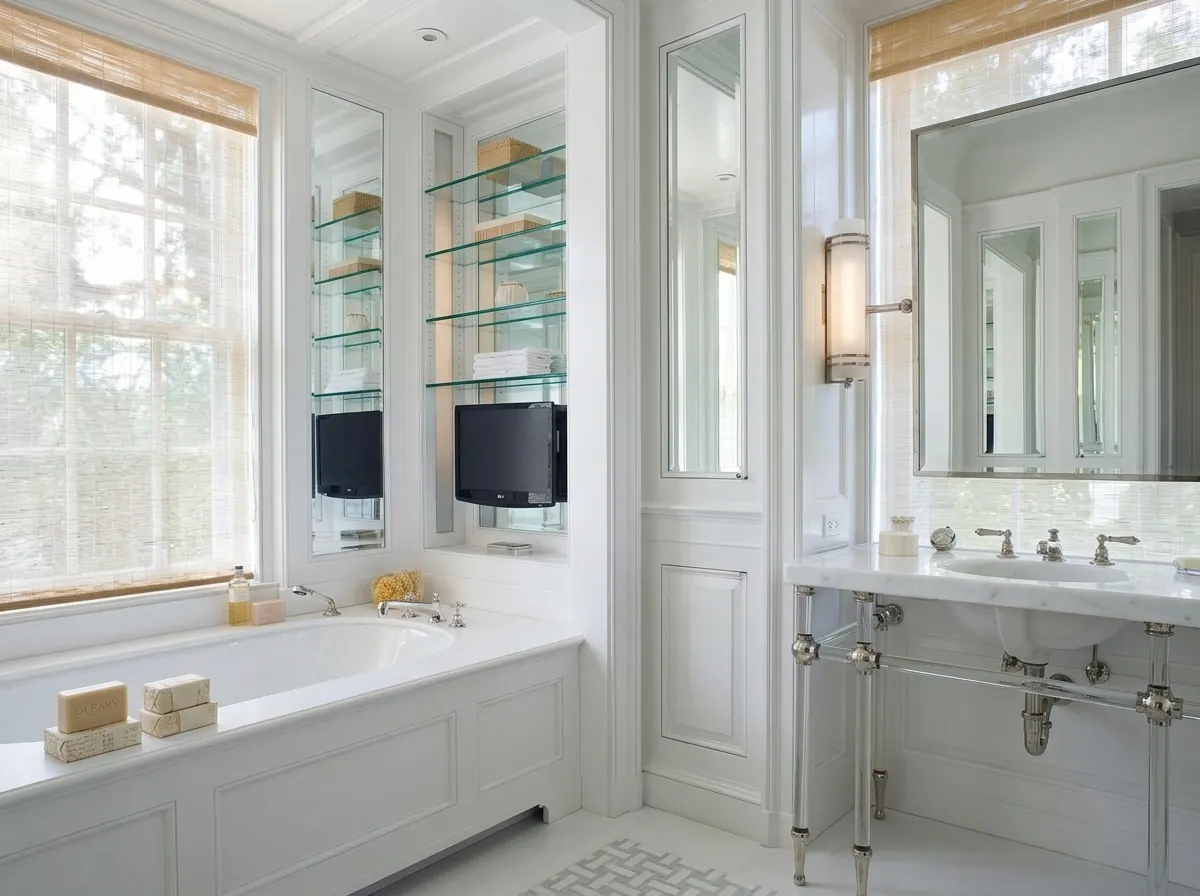
Solid surface has become the material of choice across both residential and hospitality applications for reasons that align directly with what procurement teams need to defend to ownership groups. The surface is non-porous, which means it resists staining and bacterial growth without requiring sealants. It can be fabricated seamlessly, eliminating grout lines and joints that trap dirt and degrade under commercial cleaning schedules.
From a design perspective, solid surface accepts thermoforming, which means complex curves, integrated overflows, and flush deck-mount configurations are achievable without visible seams. For hotel chains standardizing a bathroom concept across multiple properties, this translates into visual consistency that holds up over many production runs.
Custom solid surface fabrication also allows color matching to brand palettes — a significant advantage when a hotel group wants its bathrooms to carry the same visual identity from one market to the next.
What Hotel Developers Should Specify Before Contacting a Manufacturer
Arriving at a manufacturer with a clear brief shortens your sampling cycle and reduces the risk of scope creep driving up unit costs. Before initiating contact, your team should have clarity on:
- Room count and fixture types per room category — bathtubs, undermount basins, and vanity tops are often specified as a coordinated set, not individually.
- Installation constraints — alcove, freestanding, or drop-in configurations each have different substrate and rough-in requirements that affect mold selection.
- Colorway and surface finish — matte, semi-gloss, and textured finishes respond differently to hospitality-grade cleaning chemicals. Confirm compatibility early.
- Brand and labeling requirements — if your group requires branded packaging, country-of-origin documentation, or specific fixture marking for procurement records, communicate this at the RFQ stage.
- Rollout schedule and phasing — large hotel chains rarely open all properties simultaneously. A manufacturer with flexible production scheduling can align output to your opening calendar rather than requiring a single bulk delivery.
Evaluating an OEM/ODM Manufacturer for a Hotel Chain Order
Not every OEM/ODM bathroom fixture supplier is equipped to handle the operational demands of hospitality procurement. The evaluation criteria that matter most at scale are different from those that apply to a single residential project.
Production Consistency Across Runs
Color and dimensional consistency between production batches is critical when fixtures from different runs will appear side by side in adjacent guestrooms. Ask to see color tolerance documentation and request sample pieces from different production dates before committing to a full order.
Repair and Replacement Support
Solid surface can be repaired in the field, but only if the manufacturer provides matching material. Confirm that your supplier retains your colorway in stock or can reproduce it reliably years after the initial order. This matters for hotel bathroom renovation projects where replacement fixtures need to match existing installations.
Documentation and Compliance
Hotel developers operating across multiple markets need suppliers who can provide the documentation their procurement and legal teams require. This includes product data sheets, material safety information, and any region-specific compliance records relevant to the destination market.
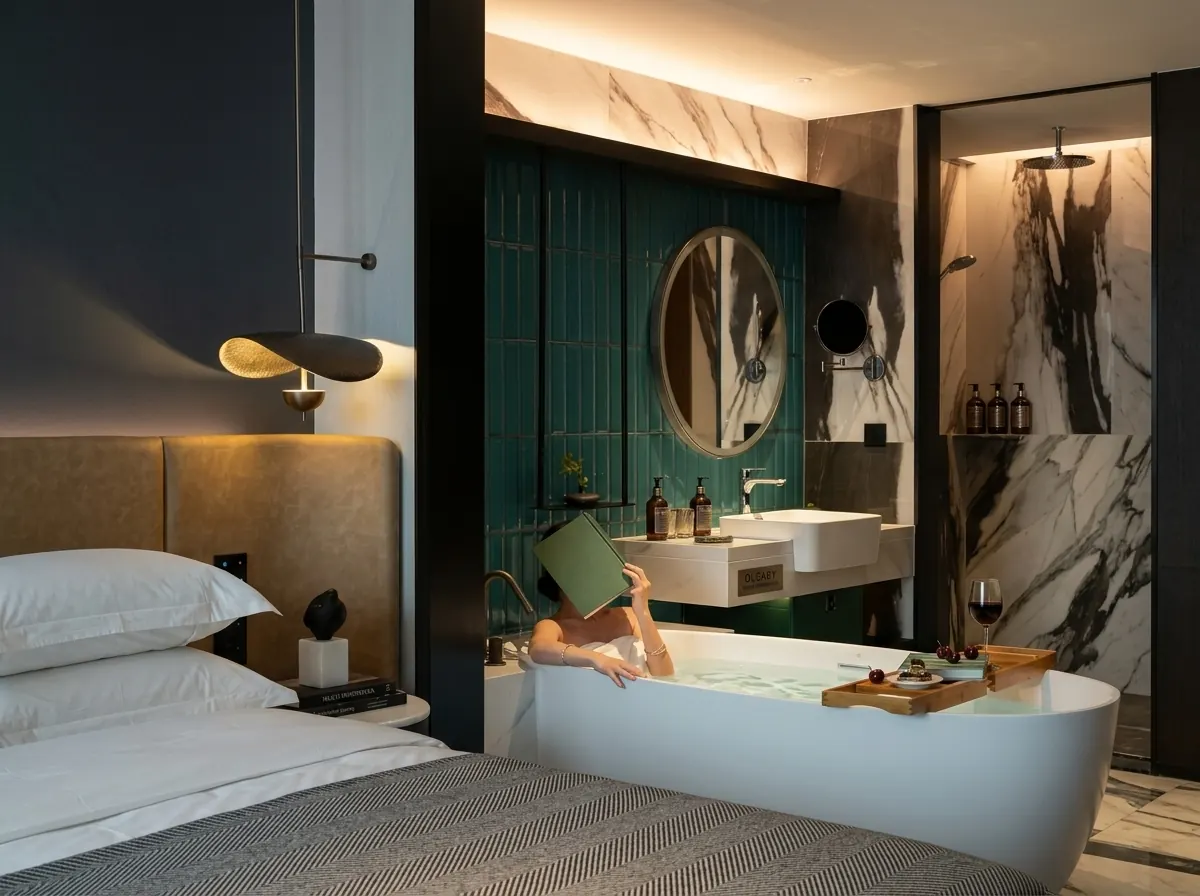
How Hotel Chain Bathtub Sourcing Works in Practice
Effective hotel chain bathtub sourcing is a staged process, not a single transaction. A well-run procurement cycle for a multi-property rollout typically moves through an RFQ phase, a sampling and approval phase, a pilot production run for QC sign-off, and then phased full production tied to property opening schedules.
Working with a manufacturer who has direct experience in hospitality — rather than one that primarily serves retail or residential channels — compresses this cycle. Hospitality-experienced suppliers understand that guestroom dimensions vary between properties, that installation teams are not always the same crew, and that the cost of a defective fixture showing up on opening day is measured in more than the unit price.
OLEARY manufactures custom solid surface bathtubs, vanity tops, and undermount basins for both residential and hospitality clients, with OEM and ODM programs structured around the specific requirements of hotel developers and procurement teams. If you are scoping a new build or renovation project, request a hotel project quote to discuss your specifications directly with the production team.