

Why Does My Acrylic Bathtub Turn Yellow, and Can It Be Fixed?
Acrylic bathtubs yellow primarily due to UV light exposure, bleach-based cleaners, hard water iron deposits, and natural oxidation of the PMMA surface layer — a process that typically becomes visible after 5 to 10 years of use. Mild yellowing can be reduced with an acrylic polish or diluted hydrogen peroxide. Severe yellowing indicates surface degradation that polishing alone cannot fully reverse.

What Actually Causes Acrylic Bathtub Yellowing?
Acrylic tubs are made from a vacuum-formed PMMA (polymethyl methacrylate) sheet, typically 3–5 mm thick, backed with fiberglass reinforcement. Color and gloss live at the surface of that PMMA layer, which makes it vulnerable to the following:
- UV light exposure: Natural and artificial UV radiation breaks down the polymer chains in PMMA over time, causing the surface to oxidize and shift yellow or amber. Bathrooms with south-facing skylights or large windows accelerate this process.
- Bleach and harsh chemical cleaners: Sodium hypochlorite (the active ingredient in most household bleach) chemically degrades the acrylic surface and strips its protective sheen, leaving it porous and more prone to staining.
- Iron-rich hard water: Water with elevated iron content (above 0.3 mg/L is considered high by EPA standards) leaves rust-tinted mineral deposits that bond to the surface and can look like yellowing from a distance.
- Natural oxidation: Even with careful maintenance, the surface PMMA layer oxidizes gradually. Most acrylic tubs manufactured to standard residential grades show visible discoloration somewhere between years 5 and 10.
Can You Fix a Yellow Acrylic Bathtub?
The answer depends on how far the degradation has progressed.
- Mild yellowing: Apply a non-abrasive acrylic polish (not a car wax with petroleum distillates) using a soft microfiber cloth in circular motions. Alternatively, fill the tub with warm water, add 1–2 cups of 3% hydrogen peroxide, and let it soak for 1–2 hours. Always test any treatment on a 6-inch patch near the drain before treating the full surface.
- Moderate yellowing: A dedicated acrylic restoration kit — available at most home improvement stores — uses a mild oxidizing compound followed by a surface sealant. Results are noticeable but rarely return the tub to factory-white.
- Severe yellowing or surface crazing: At this stage the PMMA layer has degraded structurally. Polishing will temporarily improve appearance but will not hold. Professional reglazing (refinishing) is the most practical option: a technician strips the surface, applies an epoxy or urethane topcoat, and buffs it smooth. Expect costs between $300 and $600 and a lifespan of 5 to 7 years before the coating needs redoing.
How to Prevent Acrylic Bathtub Yellowing
- Clean weekly with a pH-neutral liquid cleaner formulated for acrylic — never powder cleansers, steel wool, or bleach sprays.
- Rinse the tub thoroughly after every use to prevent mineral and soap-scum buildup.
- Install a UV-filtering window film if your bathroom receives direct sunlight for more than 4 hours per day.
- Fit a whole-house or point-of-entry iron filter if your water tests above 0.3 mg/L iron.
- Apply a dedicated acrylic surface protectant (similar to a wax sealant) every 6–12 months to slow oxidation.
Is There a Bathtub Material That Doesn't Yellow?
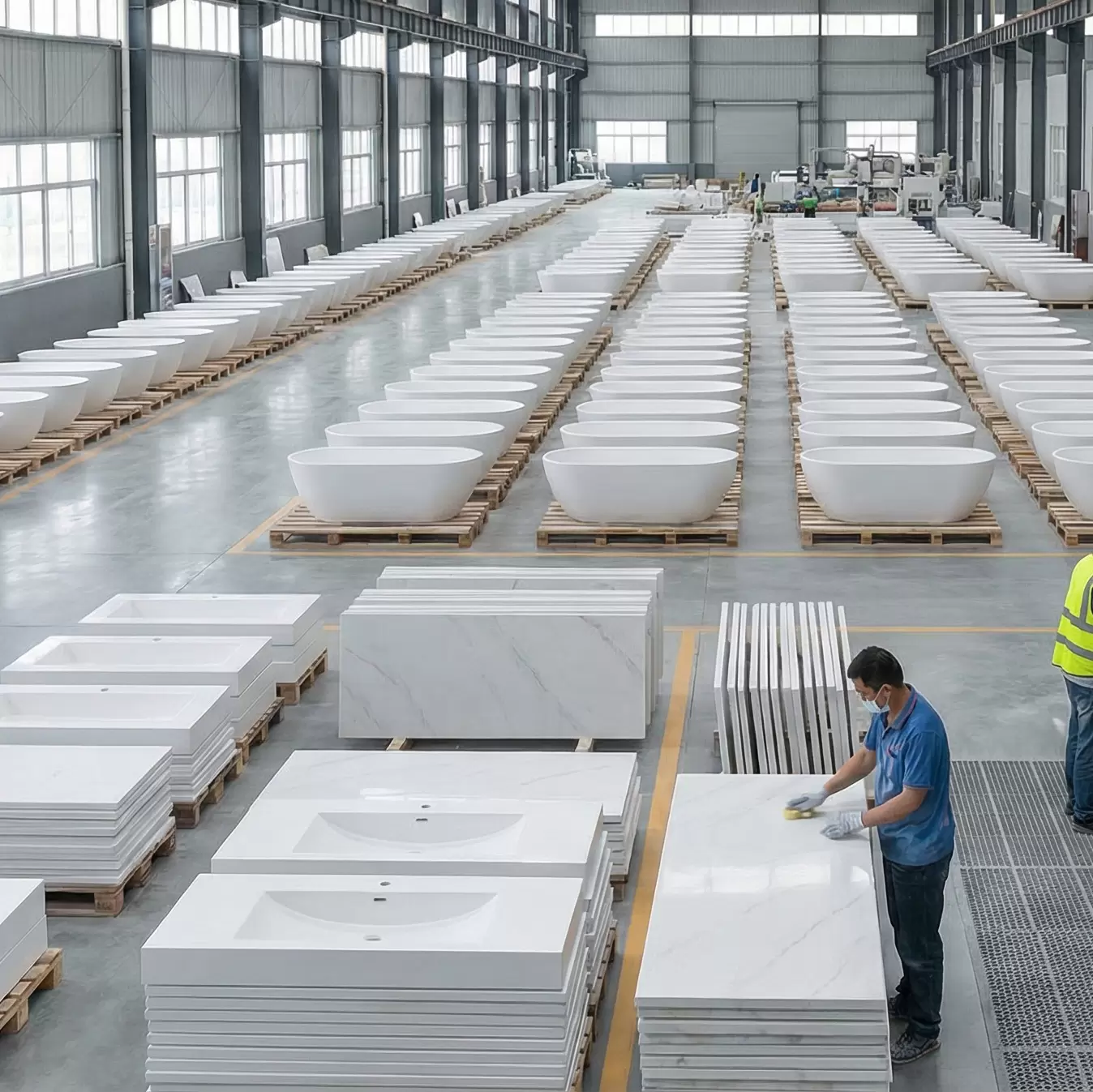
Yes. Solid surface bathtubs are significantly more resistant to yellowing because the pigment runs through the full thickness of the material — typically 10–12 mm of homogeneous resin — rather than existing only as a surface coating. There is no top layer to oxidize or bleach away. Scratches can be sanded and buffed out without exposing a different-colored substrate. For homeowners in high-UV environments or hard-water regions, a solid surface tub is a more durable long-term investment.
Cast polymer (cultured marble) tubs offer similar through-body color stability, though their gel-coat finish can still dull over time without proper care.
If you are planning a bathroom renovation and want to avoid this problem entirely, OLEARY offers a range of solid surface and premium resin tubs built for long-term color stability. Browse our wholesale bathtubs catalog or explore custom bathtubs if you have specific size or finish requirements. You can also contact us directly for product recommendations based on your water conditions and bathroom layout.
Related Questions
How Do I Clean an Acrylic Bathtub Without Scratching It?
Use a soft microfiber cloth or non-scratch sponge with a pH-neutral liquid cleaner — dish soap diluted in warm water works well for routine cleaning. Avoid powder cleansers, scrubbing pads with abrasive surfaces (anything rated above "non-scratch"), and any spray containing bleach or ammonia. For stubborn soap scum, a paste of baking soda and water applied gently with a soft cloth is effective without scratching the surface. Rinse thoroughly and dry with a soft towel to prevent water spots.
Is It Worth Refinishing an Acrylic Bathtub, or Should I Replace It?
Refinishing makes sense if the tub's structure is sound — no cracks, chips deeper than 2 mm, or flex in the floor — and you plan to stay in the home for fewer than 7 years. Professional reglazing costs $300–$600 and buys you roughly 5–7 more years. Replacing with a new acrylic unit runs $400–$1,200 for the tub alone, plus $500–$1,500 in installation labor. If you are already remodeling, replacement with a more durable material like a solid surface bathtub is often the better value over a 15–20 year horizon.
Which Bathtub Material Resists Yellowing Best Long-Term?
Solid surface and cast polymer materials outperform standard acrylic for long-term color stability because pigment is distributed through the full material thickness rather than held in a surface coating. Stone resin tubs (a composite of natural stone powder and resin) are also highly resistant. Enameled cast iron and steel are effectively immune to yellowing but add significant structural weight — cast iron tubs typically weigh 200–400 lbs. For a bathtub size guide and material comparison, or to explore options from a reputable bathtub manufacturer, visit the OLEARY product pages.